
The best team-building idea is not always the most complicated activity. A useful idea gives employees a reason to interact differently through strategy, shared problem-solving, friendly competition, creativity, or a new experience outside their normal routine.
This guide presents 25 team building ideas for companies, organized by purpose and format. Some can become activity-based corporate events in Marrakech; others work in an office, during a retreat, inside a meeting, or as short supporting challenges between larger activities.
The distinction matters: an idea is the structure that shapes participation, while an activity is one tool used to deliver it. Paintball, for example, could be casual play, a strategy mission, or one station in a points championship. Companies that need broader local context can consult the complete Team Building Marrakech guide.
What Are Some Good Team Building Ideas for Companies?
Good team building ideas include strategy tournaments, collaborative missions, team rotations, outdoor challenges, communication games, problem-solving tasks, creative challenges, department competitions, scavenger missions, and employee reward days. The right choice depends on the event objective, group size, available time, preferred physical intensity, and desired balance between competition and collaboration. A strong format keeps people involved and gives each activity a clear role; it does not simply add as many activities as possible.
25 Team Building Ideas at a Glance
| # | Idea | Best For | Group Size | Energy Level | Main Focus |
|---|---|---|---|---|---|
| 1 | Department vs Department Tournament | Friendly competition | Medium–Large | Flexible | Strategy |
| 2 | Strategy Mission | Decision-making | Small–Medium | Medium | Coordination |
| 3 | Team Points Championship | Multi-activity events | Medium–Large | Flexible | Consistency |
| 4 | Company Relay Challenge | Varied strengths | Any | Flexible | Contribution |
| 5 | Mystery Final Challenge | Event progression | Medium–Large | Flexible | Adaptation |
| 6 | One-Team Mission | Company-wide collaboration | Any | Flexible | Shared outcome |
| 7 | Collaborative Build Challenge | Planning | Small–Medium | Low–Medium | Delegation |
| 8 | Information Sharing Puzzle | Communication | Small–Medium | Low | Listening |
| 9 | Silent Team Challenge | Non-verbal coordination | Small–Medium | Low–Medium | Observation |
| 10 | Cross-Department Problem-Solving | New connections | Medium–Large | Low | Perspective sharing |
| 11 | Multi-Station Adventure Rotation | Large-group participation | Medium–Large | High | Variety |
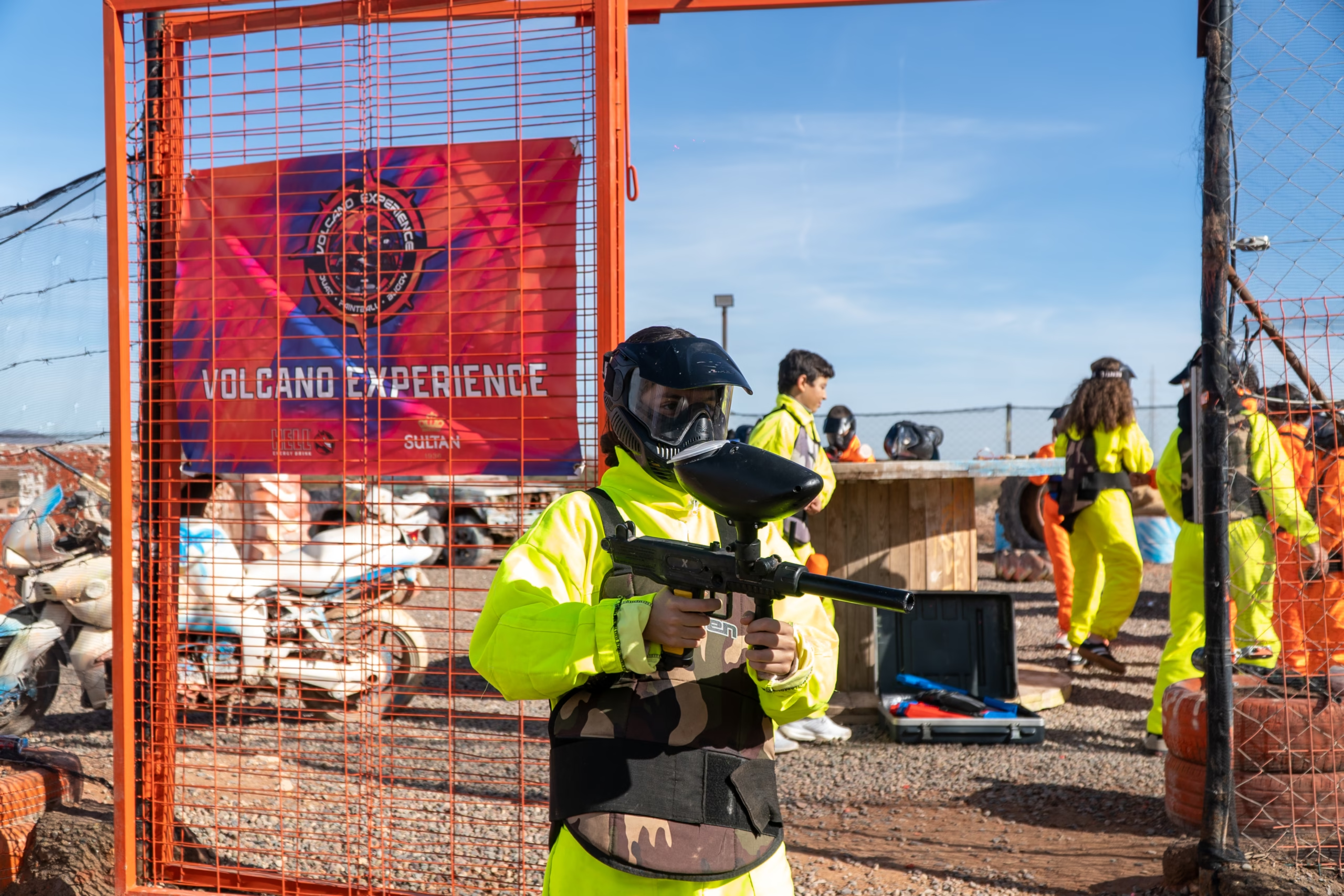
| 12 | Strategy Paintball Tournament | Competitive teams | Medium–Large | High | Roles and tactics |
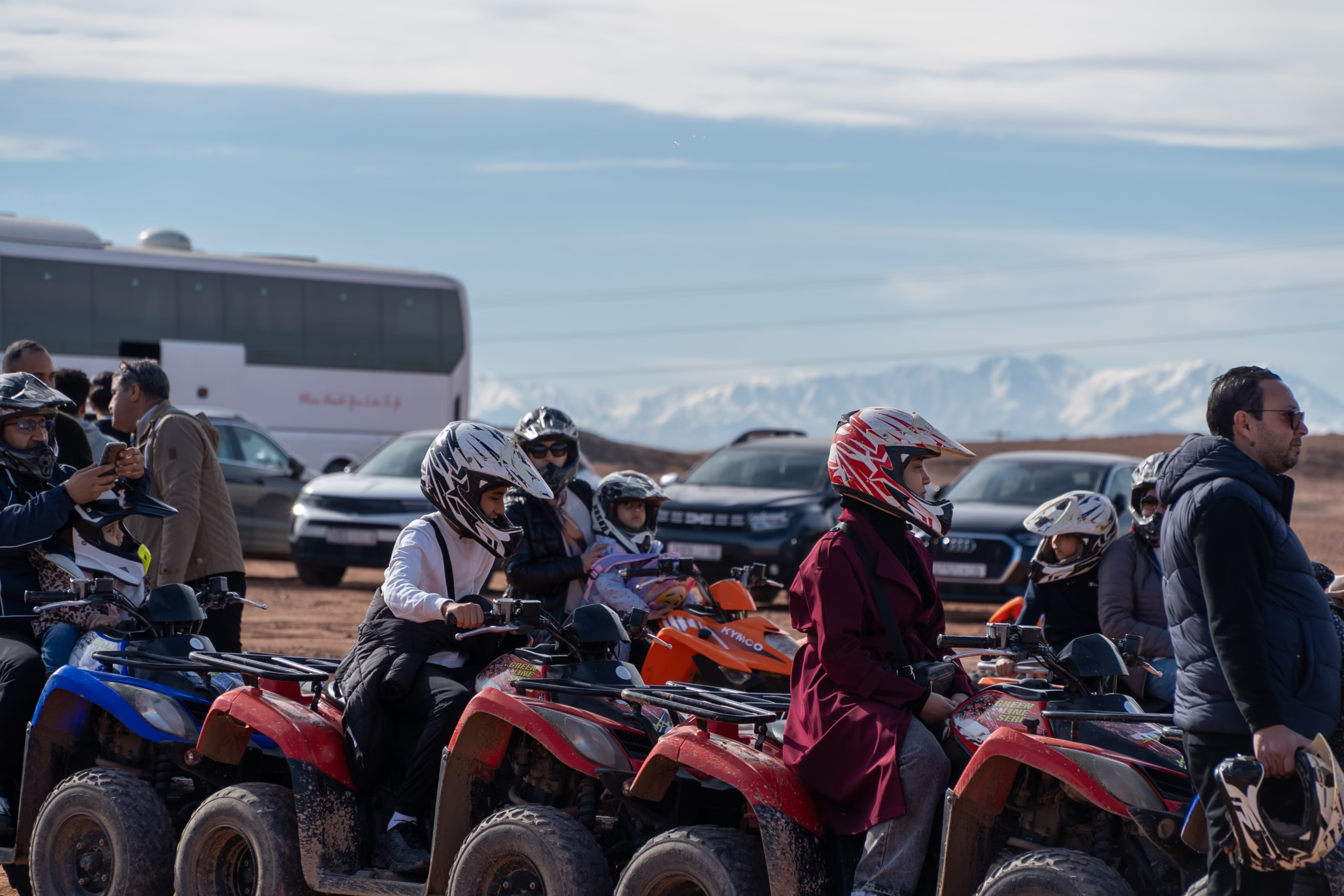
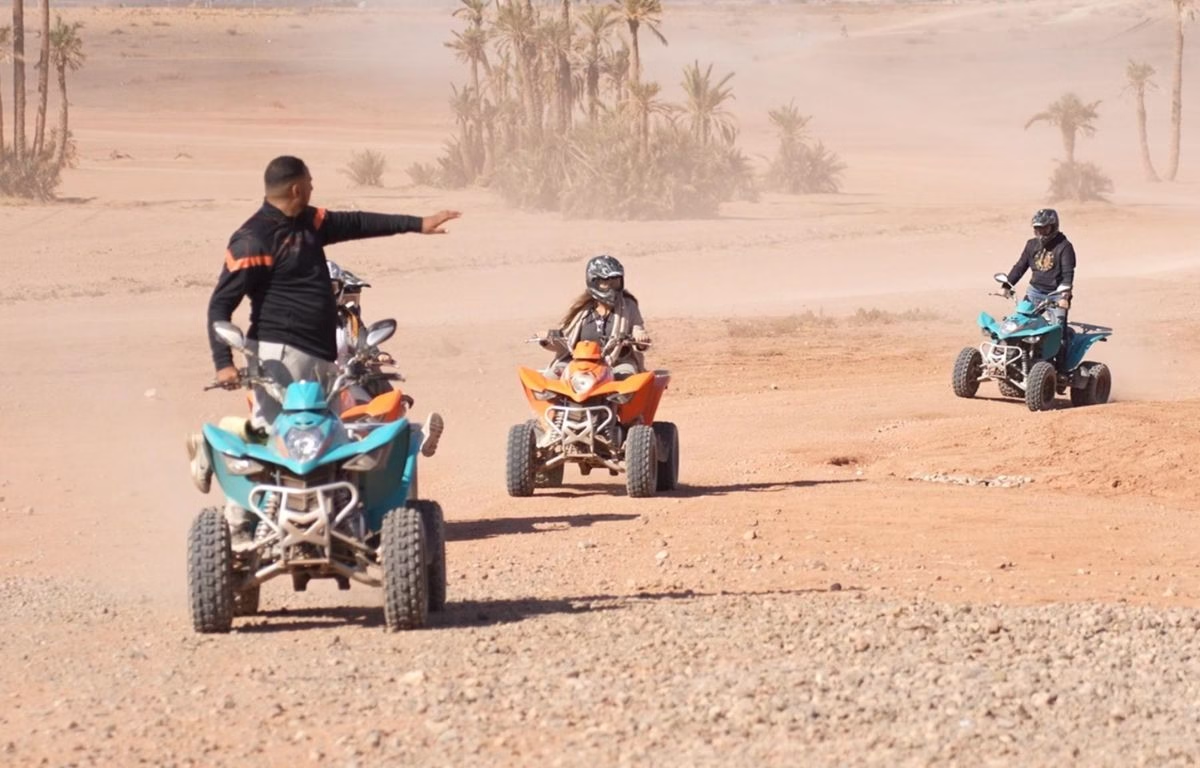
| 13 | Shared Quad Adventure | Employee reward | Small–Medium | High | Shared experience |
| 14 | Adventure + Challenge Combo | Mixed objectives | Medium–Large | Flexible | Variation |
| 15 | Outdoor Scavenger Mission | Exploration | Medium–Large | Medium | Problem-solving |
| 16 | Blind Instructions Challenge | Clear communication | Small–Medium | Low | Precision |
| 17 | Explain It Without Saying It | Creative communication | Any | Low | Expression |
| 18 | Communication Breakdown Challenge | Process awareness | Small–Medium | Low | Information flow |
| 19 | Two-Way Instruction Challenge | Feedback skills | Small–Medium | Low | Questioning |
| 20 | Team Branding Challenge | Event opening | Any | Low | Identity |
| 21 | Collaborative Story Challenge | Social connection | Small–Medium | Low | Creativity |
| 22 | Photo Mission | Informal interaction | Medium–Large | Low–Medium | Observation |
| 23 | Innovation Sprint | Idea generation | Small–Medium | Low | Collaboration |
| 24 | Team Activity + Shared Meal | Employee reward | Any | Flexible | Social time |
| 25 | Employee Choice Challenge Day | Mixed preferences | Medium–Large | Flexible | Controlled choice |
Competitive Team Building Ideas
Competition works best when it creates focus and energy without making the event overly serious. Keep the rules clear, make scoring understandable, and avoid designing every round around the same physical strength.
1. Department vs Department Tournament
Concept: Employees compete through several connected rounds as departmental or mixed teams.
Best for: Friendly competition and longer events. Energy: Flexible.
Score wins, completion, time, or teamwork across different challenges. The format can incorporate an activity such as paintball alongside shorter team tasks. Department-based teams create familiar alliances; mixed-department teams are usually more appropriate when the aim is new interaction. Watch for uneven teams and scoring that over-rewards one type of ability. Publishing the scoring system before the first round helps participants understand how every challenge contributes.
2. Strategy Mission
Concept: Teams receive an objective, limited time, clear rules, and incomplete resources or information.
Best for: Planning, decision-making, and coordination. Energy: Medium.
Allow a short planning period before the action begins. Participants may need to assign roles, decide how to use resources, and adapt when new information appears. A mission-based paintball format can execute this concept where appropriate, but the structure also works with puzzles or non-physical tasks. The challenge should reward communication rather than simply speed. Keep the mission easy to explain; complexity that requires a long briefing usually weakens participation.
3. Team Points Championship
Concept: Every activity contributes to one cumulative team score.
Best for: Connecting several activities into a coherent half-day or full-day event. Energy: Flexible.
Points may come from results, challenge completion, puzzles, creative tasks, or a limited teamwork bonus. Because every round matters, a team that performs poorly early can recover later. Use different challenge types so the same participants do not dominate throughout. A visible but simple scoreboard can maintain interest, while an overly detailed scoring model creates disputes and slows transitions.
4. Company Relay Challenge
Concept: Each participant or subgroup completes a different task before handing responsibility to the next person.
Best for: Teams with varied strengths. Energy: Flexible.
A company relay does not need to involve running. Stages can include a puzzle, coordination task, memory test, observation challenge, and short physical activity. This allows one person’s speed, another’s planning, and another’s attention to detail to matter. Avoid creating a relay where most participants wait for one long stage. Parallel lanes, short tasks, and a clear handover signal keep everyone closer to the action.
5. Mystery Final Challenge
Concept: Earlier rounds provide clues, points, advantages, or information used in an unrevealed final mission.
Best for: Creating progression and a strong ending. Energy: Flexible.
The mystery should create curiosity without leaving participants confused about the overall schedule. For example, teams might earn puzzle pieces or extra time throughout the day, then use them in the final task. The format connects separate challenges without requiring elaborate production. Make sure early results influence the finale without making a comeback impossible; otherwise teams that fall behind may disengage before the closing round.
Collaborative Team Building Ideas
Collaborative formats replace or reduce the pressure to beat colleagues. They work well when the company wants shared responsibility, cross-department interaction, or a common result.
6. One-Team Mission
Concept: The whole company works toward one outcome, with smaller units responsible for different components.
Best for: Company-wide collaboration and reducing excessive competition. Energy: Flexible.
Each subgroup completes a task, gathers information, or produces one part of the final solution. The company succeeds only when the outputs are combined. This structure makes dependencies visible without turning the activity into a workplace assessment. Ensure every subgroup has a meaningful contribution; a token task for one team will make the shared objective feel artificial.
7. Collaborative Build Challenge
Concept: Teams use safe, simple materials to build a structure, model, or solution against clear criteria.
Best for: Planning, delegation, and iteration. Energy: Low to medium.
The task might ask for height, stability, load-bearing ability, or a functional model. Teams need time to discuss a design, assign work, test it, and revise it. Give every team the same materials and explain how results will be evaluated. The value comes from the decision process, not the sophistication of the finished object, so avoid judging participants on artistic skill alone.
8. Information Sharing Puzzle
Concept: Different participants hold different pieces of information, and nobody can solve the problem alone.
Best for: Listening and accurate information exchange. Energy: Low.
Participants may receive separate clues, maps, schedules, or constraints. They must explain what they know, identify relationships, and assemble the full answer. Prevent one person from collecting every card and solving it independently; the design should require discussion. Keep the information readable and the final task concrete so difficulty comes from coordination rather than vague instructions.
9. Silent Team Challenge
Concept: Verbal communication is restricted during part of a simple, accessible task.
Best for: Observation, planning, and non-verbal coordination. Energy: Low to medium.
Teams can arrange objects, reproduce a pattern, or complete a sequence using signals agreed before the silent phase. It should not involve hazardous movement, blindfolding, or tasks where spoken warnings are needed. The restriction creates a new communication condition; it is not a personality test. A brief discussion afterward can explore which signals were clear and where assumptions caused confusion.
10. Cross-Department Problem-Solving Session
Concept: Mixed teams respond to a fictional, non-sensitive business scenario.
Best for: Cross-department interaction and sharing different perspectives. Energy: Low.
Give teams a neutral challenge such as allocating limited resources, designing a fictional launch, or planning a simple event. The scenario should be understandable without specialist knowledge. Ask for a short solution and rationale, not a polished presentation. Unless the company deliberately provides a suitable internal case, avoid confidential operational problems that could make participants defensive or expose sensitive information.
Outdoor and Activity-Based Team Building Ideas
Outdoor formats can add movement, space, and a change of setting, but the event concept still determines how people participate. For a deeper explanation of the format, see why outdoor team building works.
11. Multi-Station Adventure Rotation
Concept: Smaller teams move between different activity stations at scheduled intervals.
Best for: Medium and large groups that need variety and steady participation. Energy: High.
One station might use a competitive activity, another an adventure experience, and a third a short team challenge. Equal session lengths and clear movement signals help prevent bottlenecks. This format is particularly relevant to venues offering several corporate team-building programs. Ask how many people can participate at each station and what happens during transitions; rotation only works when waiting time is controlled.
12. Strategy Paintball Tournament
Concept: Paintball is organized around team roles, clear missions, communication, and consistent scoring.
Best for: Groups comfortable with a high-energy competitive format. Energy: High.
Rather than treating each round as unstructured play, teams can plan before a mission, assign roles, and review their approach between rounds. Clear rules and balanced playing time are essential. Volcano offers paintball in Marrakech, which can be discussed as part of a company event. Confirm participant requirements and provide an alternative role or format where relevant for people who do not wish to take part.
13. Shared Quad Adventure
Concept: Colleagues take part in a shared quad experience as the adventure element of a company day.
Best for: Employee rewards, outings, or a change from the normal workplace. Energy: High.
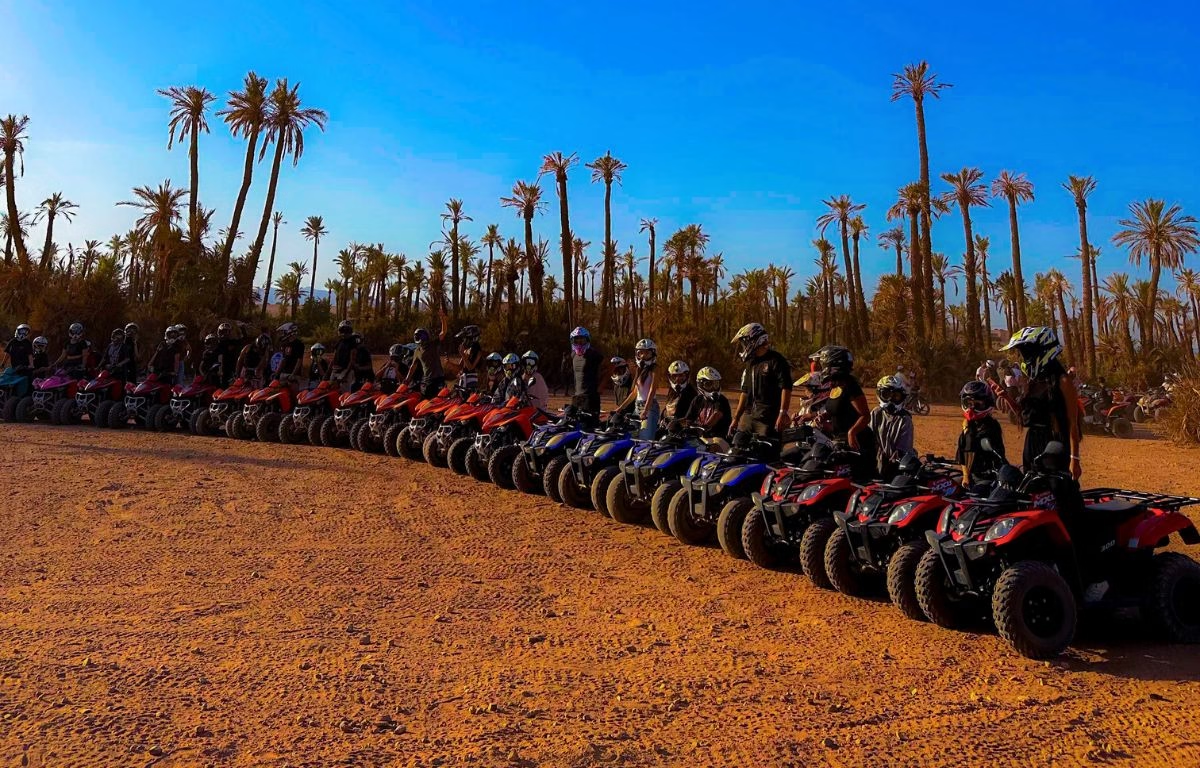
This is best described honestly as a shared experience—not automatically as a collaboration exercise. It can sit between more structured challenges or form the main activity in a social outing. Companies considering quad biking in Marrakech should confirm the route format, participation requirements, timing, transport, and how non-riders will be accommodated before finalizing the program.
14. Adventure + Challenge Combo
Concept: An adventure activity is combined with one or more short communication or team challenges.
Best for: Groups wanting both active experiences and structured interaction. Energy: Flexible.
A simple flow could be adventure activity, break, communication challenge, second activity, and closing result. The contrast changes the type of energy and gives different participants opportunities to contribute. This is an event-design idea, not a fixed Volcano package. Avoid adding a challenge merely to increase the activity count; each segment should support the purpose or improve the rhythm of the day.
15. Outdoor Scavenger Mission
Concept: Teams progress through a defined area using clues, checkpoints, questions, and safe tasks.
Best for: Exploration, observation, and medium-to-large groups. Energy: Medium.
The route should be bounded, instructions should be unambiguous, and checkpoints should distribute teams rather than funnel everyone into one location. Tasks can mix observation, photos, puzzles, and information gathering. This is a general idea and should not be presented as a Volcano Experience service unless confirmed. Consider accessibility, weather, supervision, and participant privacy when designing the mission.
Communication-Focused Team Building Ideas
Communication challenges work best when the task creates a real need for clarity. Keep the lesson visible without turning a short activity into a forced corporate lecture.
16. Blind Instructions Challenge
Concept: One participant sees information that teammates cannot and guides them through a safe, stationary task.
Best for: Precision and active listening. Energy: Low.
The unseen information might be a simple model, pattern, arrangement, or drawing. Teammates can ask questions while trying to reproduce it. Avoid blindfolded navigation or any physical task where limited visibility introduces risk. The challenge becomes more useful when teams compare which instructions were specific, which assumptions caused errors, and how feedback improved the second attempt.
17. Explain It Without Saying It
Concept: Participants explain an object, process, or neutral concept without using several obvious words.
Best for: Creative expression, listening, and short energizers. Energy: Low.
Use workplace-neutral subjects so specialist knowledge does not determine the winner. Teams earn points for correct answers within a time limit, or play cooperatively against a shared target. The forbidden-word constraint encourages people to reformulate information and notice what their teammates understand. Keep the rounds short; repetition quickly reduces the challenge’s energy.
18. Communication Breakdown Challenge
Concept: A task deliberately separates information across roles or channels, creating a manageable communication obstacle.
Best for: Understanding information flow. Energy: Low.
One subgroup may receive requirements, another resources, and another the sequence needed to complete the task. The design should create solvable friction, not arbitrary confusion. Afterward, ask what information was missing, where messages changed, and which adjustment helped. This is not a psychological assessment; it is a practical demonstration of how process design affects communication.
19. Two-Way Instruction Challenge
Concept: Teams compare one-way instructions with a second round that permits questions and feedback.
Best for: Demonstrating that communication includes confirmation, not just sending information. Energy: Low.
Person A explains a simple drawing or arrangement. In round one, Person B cannot ask questions; in round two, questions are allowed. Compare accuracy, confidence, and time without embarrassing individuals. The contrast is usually clearer than a long explanation. Use different tasks in each round so participants cannot succeed simply through memory.
Creative and Lower-Intensity Team Building Ideas
Lower-intensity does not mean lower value. Creative formats can make participation easier for teams that do not want a physically demanding event or need a quieter segment between active rounds.
20. Team Branding Challenge
Concept: Teams create a name, short slogan, simple identity, and flag or sign using safe basic materials.
Best for: Opening a tournament or rotation event. Energy: Low.
Set a short time limit and make it clear that graphic-design quality is not the objective. Teams can use their identity during later rounds, making the event feel connected without elaborate branding. Avoid presentations that take longer than the creation itself. A 30-second introduction per team is usually enough to establish identity and move into the main program.
21. Collaborative Story Challenge
Concept: Each participant contributes one part of a shared story around a neutral theme.
Best for: Lighter social events and small-to-medium teams. Energy: Low.
The story can be written, spoken, or assembled visually. Add simple constraints such as including three objects or changing direction halfway to prevent one person from controlling the outcome. The goal is playful contribution, not literary performance. Avoid topics that invite personal disclosure; a fictional travel mission or imaginary product usually keeps the format comfortable.
22. Photo Mission
Concept: Teams complete a list of safe, creative photo prompts during the event.
Best for: Informal interaction, observation, and adding a light secondary challenge. Energy: Low to medium.
Prompts might ask teams to recreate a company value visually, capture a non-sensitive object, or document a group task. Obtain appropriate consent, respect anyone who prefers not to appear, and do not require public posting. Judge creativity or completion rather than camera quality. The mission works best when prompts fit the location and do not interrupt the primary activities.
23. Innovation Sprint
Concept: Teams develop an idea, sketch, and short pitch in response to a fictional challenge.
Best for: Creativity and collaborative decision-making. Energy: Low.
Use an accessible prompt such as improving a fictional customer journey or designing a service for an imaginary audience. Give limited time for discussion, a basic visual, and a concise pitch. Evaluate clarity, originality, or fit with the brief—not business accuracy. The sprint should feel distinct from employees’ normal work, so avoid assigning a disguised version of an overdue office project.
Social and Reward-Based Team Building Ideas
Some events should prioritize enjoyment and informal interaction. They do not need complex scoring or a formal learning objective to be worthwhile.
24. Team Activity + Shared Meal
Concept: One clear group activity is followed by a meal or unstructured social time.
Best for: Employee rewards, celebrations, and teams that want a relaxed finish. Energy: Flexible.
The activity gives colleagues a common experience; the meal provides space to talk without another task to complete. Confirm travel, food timing, dietary requirements, and whether catering is supplied by the venue or arranged separately. Do not assume Volcano provides a specific catering format unless it is confirmed for the event. One well-run activity plus social time can be stronger than several rushed bookings.
25. Employee Choice Challenge Day
Concept: Employees choose from a controlled set of broad formats before the organizer builds one workable program.
Best for: Groups with mixed preferences. Energy: Flexible.
A short poll might offer competitive, adventure, creative, collaborative, or lower-intensity options. The organizer then uses the pattern of responses not every individual request to select the final format. This creates input without designing dozens of personalized schedules. Explain that the poll guides the decision rather than guaranteeing every option, and retain alternatives for people with relevant participation constraints.
Which Team Building Idea Should You Choose?
Start with the desired interaction, then shortlist formats that produce it.
| Objective | Ideas to Consider |
| Communication | 8, 16, 17, 18, 19 |
| Collaboration | 6, 7, 8, 10, 14 |
| Friendly competition | 1, 2, 3, 4, 12 |
| Leadership and decisions | 2, 4, 10, 23 |
| Cross-department interaction | 1 with mixed teams, 6, 10, 25 |
| Employee reward | 13, 24, 25 |
| New-team integration | 6, 8, 20, 21 |
| Large-group engagement | 3, 5, 11, 15 |
| Lower-intensity event | 8, 17, 20, 21, 23 |
| Outdoor experience | 11, 12, 13, 14, 15 |
The best team building activities in Marrakech article can help once you move from selecting a format to comparing the actual activities used to deliver it.
Team Building Ideas by Group Size
Small Teams
Choose ideas where everyone can contribute directly: strategy missions, information-sharing puzzles, collaborative builds, instruction challenges, or innovation sprints. Small teams need fewer rotations, but the activity should not depend too heavily on one dominant participant.
Medium Groups
Team-vs-team tournaments, points championships, scavenger missions, and mixed-department challenges work well because the group can split into several viable teams. Decide whether teams compete simultaneously or in short scheduled rounds.
Large Groups
Prioritize stations, parallel activities, subgroups, and clear rotations. Ideas 3, 5, 11, and 15 can scale when activity throughput, waiting areas, briefings, and transitions are planned. Large-group suitability depends on the operational design, not merely the name of the activity.
Team Building Ideas by Available Time
Under 1 Hour
Use one focused challenge: Explain It Without Saying It, an information-sharing puzzle, a team-branding task, or a short innovation sprint. Leave time for instructions and a clear finish.
1–2 Hours
Choose one substantial format such as a strategy mission, collaborative build, relay challenge, or tournament. Avoid compressing multiple unrelated concepts into a short session.
Half-Day
Connect two or three challenges through points, a shared mission, or a final task. A multi-station rotation can work if transition time is included.
Full-Day
A varied championship or adventure-and-challenge program can alternate active and lower-intensity segments. Companies moving from ideas to execution can use this team-building event planning guide.
High-Energy vs Low-Energy Team Building Ideas
High-energy options include the department tournament, adventure rotation, strategy paintball, and shared quad experience. Medium-energy formats include a scavenger mission, one-team mission, or relay with mixed task types. Low-energy choices include information puzzles, communication games, team branding, collaborative storytelling, and innovation sprints.
Lower intensity is not inferior. It may fit the participants, schedule, or objective better. A mixed program can also alternate energy levels. For more detail on participation, challenge, and event flow, see what makes a great corporate team-building experience.
Can You Combine Several Team Building Ideas?
Yes, but the ideas should feel connected. A simple structure is:
Opening challenge → main activity → short team task → second activity → final result or social moment
Give each element a role. The opening can establish teams, the main activity can generate energy, a short task can change the type of contribution, and the finale can provide closure. Do not combine ideas merely to maximize activity count. Three connected formats often produce a clearer experience than eight rushed activities.
Example Team Building Idea Combinations
The following are illustrative concepts, not fixed Volcano Experience packages.
Communication-Focused Half-Day
Team formation → information-sharing puzzle → main activity → two-way instruction challenge → brief closing.
Competitive Corporate Day
Team identity → tournament round → rotation → points challenge → mystery final mission.
Employee Reward Outing
Shared adventure → planned break → lighter social challenge → meal or informal time.
Large-Group Rotation
Teams A, B, and C start at different stations → rotate at fixed intervals → join for one shared final challenge.
Companies exploring wider formats beyond dedicated team building can also review company events in Marrakech.
Turning Team Building Ideas Into an Event at Volcano Experience
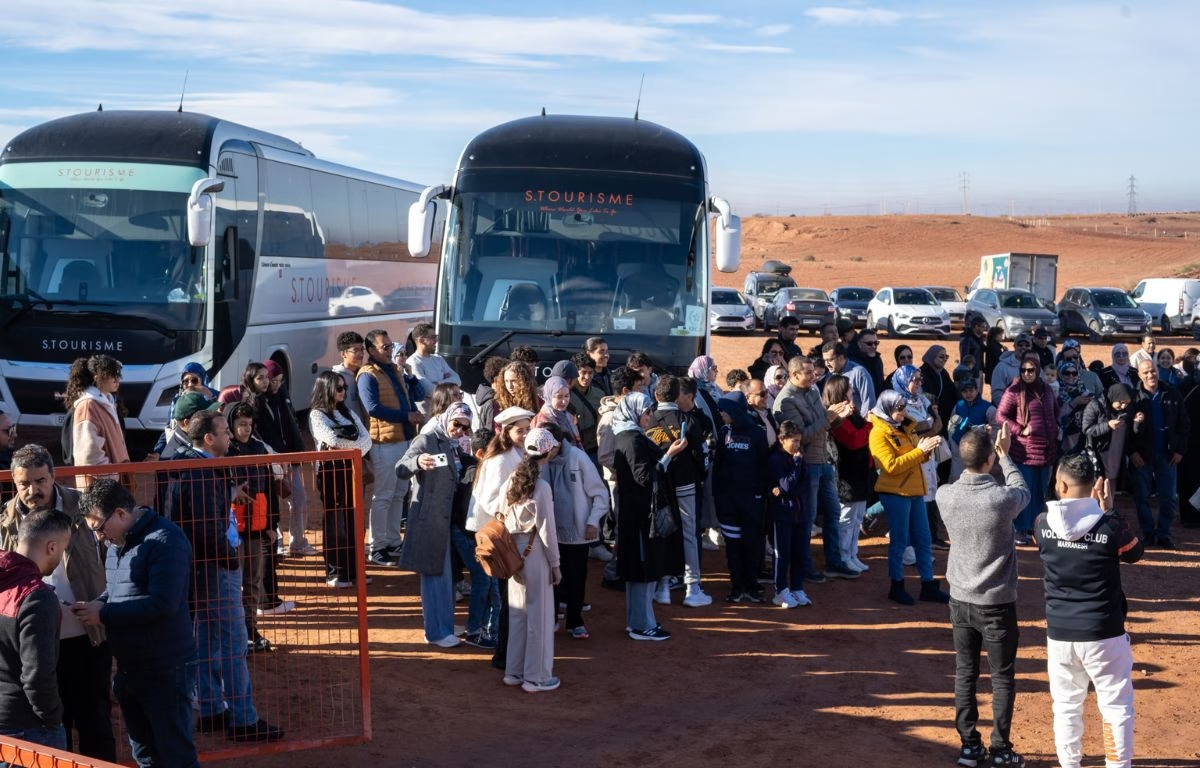
Volcano Experience presents activity-based group experiences in Marrakech and a dedicated offer for companies, schools, and larger groups. Its official website currently highlights paintball, quad biking, team challenges, and organized group formats.
Companies can bring a concept from this article—such as a tournament, rotation, strategy mission, adventure-and-challenge format, or points championship—and discuss how it might work with available activities. This does not mean Volcano offers all 25 ideas. Creative games, fictional business exercises, scavenger missions, and other general concepts should be confirmed separately rather than assumed to be part of its service.
Ideas That Can Naturally Work With Volcano Activities
Paintball Strategy Tournament
A paintball team activity can use defined missions, team roles, several rounds, and cumulative scoring when the format suits the participants.
Shared Quad Experience
A quad experience can provide the adventure or reward component of a company day without being misrepresented as a communication exercise.
Multi-Activity Company Day
Volcano’s team building and corporate events in Marrakech page is the appropriate place to discuss activity sequences, rotations, group requirements, and an event-specific proposal. When comparing organizers later, use the guide on how to choose a team building company in Marrakech.
Common Mistakes When Choosing Team Building Ideas
Choosing the Most Extreme Idea
Problem: Spectacle becomes more important than suitability. Better approach: Select an intensity that most participants can approach comfortably and provide appropriate alternatives.
Selecting Activities Before Understanding the Team
Problem: The format may exclude people or conflict with the objective. Better approach: Confirm group profile, constraints, and desired interaction first.
Making Every Idea Competitive
Problem: The same personalities may dominate and pressure can replace interaction. Better approach: Mix friendly competition with shared or creative tasks.
Trying to Fit Too Many Ideas Into One Day
Problem: Briefings and transitions consume the schedule. Better approach: Choose fewer ideas and give each enough time to work.
Ignoring Different Fitness Levels
Problem: Physical intensity becomes the only route to contribution. Better approach: Include strategy, observation, communication, and coordination roles.
Forgetting Waiting Time
Problem: A strong activity becomes weak when most employees watch. Better approach: Ask about throughput, parallel stations, and rotation timing.
Copying Another Company’s Event
Problem: A format designed for a different group may not transfer. Better approach: Adapt the mechanics to your people, time, and objective.
Choosing an Idea Because It Looks Good on Social Media
Problem: Visual impact does not guarantee participation. Better approach: Evaluate what employees will actually do, not only what the photos may show.
Having No Clear Ending
Problem: The day simply stops after the final activity. Better approach: Use a result, group moment, short recognition, or informal closing to create completion.
Team Building Idea Selection Checklist
Before choosing an idea, ask:
What is the primary objective?
How many people will participate?
How much time is available?
Should intensity be high, medium, low, or mixed?
Is competition or collaboration more appropriate?
Will the event be indoors, outdoors, or mixed?
Are there relevant accessibility or participation considerations?
Will everyone have an active role?
How much waiting could occur?
Does the idea fit the available budget?
Can the format scale to the group?
How will the event end?
When budget becomes the next decision, consult the guide to team building costs in Marrakech.
FAQ — Team Building Ideas for Companies
What are good team building ideas for companies?
Good ideas create a specific kind of interaction. Options include strategy missions, team tournaments, collaborative builds, communication puzzles, multi-station rotations, creative sprints, outdoor missions, and activity-plus-meal formats. Choose according to the objective, participants, time, and desired intensity rather than selecting whatever appears most exciting.
What are some fun team building ideas?
Fun formats can include a points championship, mystery final challenge, company relay, photo mission, team-branding challenge, shared adventure, or friendly paintball tournament. Enjoyment depends on clear rules, suitable difficulty, low waiting time, and a format employees can join comfortably—not on novelty alone.
What team building ideas work for large groups?
Large groups generally need formats that divide participants into smaller teams and keep several groups active simultaneously. Multi-station rotations, points championships, scavenger missions, department tournaments, and a shared final challenge can work when station capacity, transition time, briefings, and waiting are managed carefully.
What team building ideas work for small teams?
Small teams can use information-sharing puzzles, strategy missions, collaborative builds, instruction challenges, innovation sprints, or one-team missions. Choose a task where every person has a meaningful contribution and where one confident participant cannot complete the entire challenge alone.
What are good outdoor team building ideas?
Outdoor ideas include multi-station adventure rotations, strategy paintball tournaments, scavenger missions, company relays, shared quad experiences, and adventure-plus-challenge programs. Match the format to participant comfort and consider weather, shade, hydration, space, supervision, and waiting time when developing the event.
What team building ideas encourage communication?
Information-sharing puzzles, blind instructions tasks, communication breakdown challenges, two-way instruction exercises, silent challenges, and strategy missions can create a practical need to exchange information. Keep the task concrete and allow a short review of what made instructions clearer without turning the activity into an assessment.
Does team building need to be competitive?
No. A company can use one-team missions, collaborative builds, shared problem-solving, storytelling, innovation sprints, or a recreational group experience. Friendly competition can add energy, but collaboration may better suit integration, reward, or cross-department objectives. Some programs combine both.
How many activities should a team building event include?
There is no universal number. A short event may need one substantial activity, while a half-day can connect two or three formats. The deciding factors are briefing time, participation, transitions, breaks, and purpose. Fewer well-connected activities are usually better than many rushed ones.
Can team building ideas be adapted for different fitness levels?
Yes. Use varied roles and challenges that reward strategy, observation, communication, creativity, and coordination as well as movement. Adjust intensity where possible, confirm relevant participation requirements, and avoid formats in which physical performance is the only meaningful contribution.
What team building ideas can companies organize in Marrakech?
Companies can consider outdoor rotations, strategy paintball, shared quad experiences, team tournaments, collaborative missions, communication challenges, or mixed activity programs. Availability and suitability should be confirmed with the venue. Volcano offers activity-based corporate formats, but companies should not assume every general idea in this guide is available as a Volcano service.
Discuss Your Team Building Ideas in Marrakech
Start with the interaction you want, then choose a format that fits the people, time, intensity, and budget. If you are considering an activity-based event in Marrakech, send Volcano Experience your objective, preferred date, approximate group size, available duration, and preferred activity style.
You can review the corporate team-building options or contact Volcano Experience to discuss an appropriate event format. The aim is not to fit every idea into one day, but to turn the right idea into a coherent experience for your team.