

A team-building event can be well organized and still feel weak. The venue may look good, the activities may sound exciting, and the schedule may run on time. Yet the experience can fall flat if participants do not understand why they are there, cannot contribute comfortably, spend too long waiting, or face challenges that do not fit the group.
A great corporate team building experience is created through purpose + participation + challenge + flow + facilitation + relevance. These elements shape who contributes, how teams interact, and whether the event reaches a clear ending.
The most expensive venue or longest activity list cannot replace good experience design. For broader context, begin with the complete guide to Team Building in Marrakech.
What Makes a Corporate Team Building Experience Great?
A great corporate team building experience has a clear purpose, keeps people actively involved, offers an achievable level of challenge, and gives different participants meaningful ways to contribute. It balances competition with collaboration, uses clear instructions, maintains a comfortable rhythm, and moves smoothly between activities. Strong experiences also create shared moments and end with suitable closure or reflection. They do not require the most expensive venue, extreme activities, or the largest possible activity count.
1. The Experience Needs a Clear Purpose
Participants do not need to hear a long speech about company values. The organizer does, however, need to know why the event exists. Communication, integration, reward, cross-department interaction, friendly competition, reconnection, and milestone celebration produce different experiences.
A weak event tries to achieve all of them. A strong event has one dominant purpose that influences how teams are formed, which behaviors the activities require, and how the day ends.
If the purpose is integration, employees should meet people outside their normal circle. If it is reward, the atmosphere should not feel like another performance test. Purpose becomes visible through the participant experience, even when it is communicated in one simple sentence.
2. The Event Should Be Designed Around Participants, Not the Activity
Activities are tools. Participants are the experience.
An impressive activity can weaken the event if half the group cannot participate comfortably, instructions remain confusing, teams are badly balanced, or most employees spend their time watching. Start with the group and ask what kind of interaction it needs.
| Activity-Centered Thinking | Participant-Centered Thinking |
|---|---|
| What activity looks exciting? | What fits this team? |
| How many activities can we add? | How much participation can we create? |
| What is the most extreme option? | What level of challenge is appropriate? |
| What looks impressive in photographs? | What creates useful interaction? |
3. People Need to Participate, Not Just Attend
Attendance means being physically present. Participation means making decisions, communicating, solving problems, supporting teammates, moving where appropriate, or contributing to a shared result.
The practical test is simple: at any given moment, what are most participants doing? If the answer is “waiting for their turn,” the group may be attending an activity without experiencing meaningful team building.
4. Waiting Time Can Destroy an Otherwise Good Event
An excellent activity can become operationally weak when 20 people participate and 60 watch without a role. Energy falls, side conversations grow, and later instructions become harder to deliver.
Participant throughput matters: how many people can take part meaningfully within the available time? Rotations, parallel stations, and supporting roles can improve it.
A break is intentional. Waiting is usually not.
A planned break has a clear purpose. Uncontrolled waiting leaves employees unsure what is happening or when they will participate.
5. The Challenge Should Be Difficult Enough, but Not Too Difficult
If a challenge is too easy, teams finish without discussing a strategy. If it is too difficult, confusion and frustration replace interaction. The productive middle feels like: “We can do this if we work together.”
For example, a communication task should not be solved by one obvious instruction. It should require people to exchange information. But it should not contain so many unclear rules that teams spend the entire round asking what the task means.
6. A Great Experience Does Not Require Everyone to Be the Same
Corporate groups include different ages, fitness levels, confidence levels, personalities, and familiarity with activities. Strong design does not pretend these differences do not exist.
Avoid formats in which the most athletic or outspoken employees dominate every round. Build several types of contribution into the experience: strategy, communication, coordination, observation, speed, decisions, leadership, and support.
Inclusivity does not mean removing every challenge. It means participants have credible ways to contribute without embarrassment or unwanted disclosure.
7. How Teams Are Formed Changes the Experience
Team allocation is not a trivial administrative detail. It determines who interacts with whom.
- Existing departments can strengthen familiar groups but may preserve the workplace circles the event was meant to change.
- Mixed departments can create new connections across the company.
- Random teams add freshness when the result remains reasonably balanced.
- Balanced teams can improve fairness without publicly ranking employees.
8. Competition Should Add Energy, Not Pressure
Competition can sharpen attention, encourage strategy, and give a team a shared target. It works when the rules are understandable, scoring is fair, and the result remains proportionate to a corporate event.
Too much emphasis on winning can exclude quieter participants, reward aggressive behavior, and make colleagues avoid experimentation. Friendly competition creates energy without making the losing team feel that it failed a workplace test.
Not every event needs a winner. Teams can compete during individual rounds and collaborate in a final mission.
9. Good Facilitation Is Often Invisible, but Essential
Facilitation is the work that helps participants interact without making the facilitator the center of the event. A facilitator explains rules, resolves confusion, protects fairness, maintains pace, manages transitions, and notices when participation is becoming uneven.
The facilitator creates the conditions. The participants create the experience.
10. Participants Should Understand What They Are Supposed to Do
Unclear rules reduce confidence, fairness, participation, and pace. A concise briefing should answer:
- What is the objective?
- What are the main rules?
- How is the task completed or won?
- How much time is available?
- What should participants avoid?
- What happens after the round?
The briefing should be complete enough to prevent confusion but short enough to remember.
11. A Great Event Has Rhythm
Strong experiences vary their energy:
High-energy activity → short transition → different challenge → break → renewed activity → final shared moment
Constantly increasing intensity can exhaust people. Long pauses can flatten energy. A good rhythm creates a rise, variation, recovery, renewed focus, and closure.
Three activities at different energy levels can feel richer than six delivered at the same pace.
12. Transitions Are Part of the Experience
Companies often focus on activities and overlook walking between stations, equipment changes, team movement, new instructions, score updates, and break announcements.
Poor transitions make a good program feel improvised. Smooth transitions feel intentional: people know where to go, how long they have, and what happens next. For the operational planning behind this flow, add : How to Organize a Successful Team Building Event in Marrakech
13. The Best Moments Are Often Shared, Not Individual
Strong corporate experiences give teams common reference points: solving a difficult challenge, completing a mission, recovering after a poor round, or reaching a final result together.
The moment does not need to be dramatic. It needs to be genuinely shared.
14. Good Team Building Reveals Different Strengths
One challenge may reward speed. Another may reward planning, communication, observation, or coordination. When the experience changes the type of contribution required, different employees have a chance to become useful to the team.
This is not a personality test. A short activity cannot scientifically reveal character or workplace potential; it can only make different contributions more visible during the event.
15. Variety Matters, but More Is Not Always Better
Three well-designed activities can create a stronger experience than eight rushed ones. Useful variety changes the interaction type, energy, challenge, or teamwork style.
Variety should change the experience, not just increase the activity count. Readers choosing actual options can use [INTERNAL LINK: Best Team Building Activities in Marrakech for Companies].
16. The Environment Should Support the Experience
The environment should provide enough usable space, a clear briefing area, suitable rest points, practical station visibility, and comfortable movement between activities.
A dramatic location cannot compensate for confusing participant flow.
For a focused discussion of the outdoor format, add : Outdoor Team Building in Marrakech: Why It Works
17. Breaks Should Protect Energy
Breaks allow hydration, recovery, informal conversation, and a mental reset. They also give organizers time to prepare the next phase without making participants feel forgotten.
Compare a planned 10-minute break with 30 minutes of unexplained waiting. In the first case, people know what the pause is for and when the experience restarts. In the second, uncertainty becomes the dominant experience.
18. The Event Needs a Proper Ending
An event should not simply stop when the last activity ends. A final challenge, score announcement, team recognition, group photograph, short reflection, or informal social moment gives the experience closure.
Awards are optional. Closure is not. Participants should understand that the event has reached a shared endpoint.
19. Does Every Team Building Event Need a Debrief?
No. A recreational or reward-focused event does not always need a formal workshop-style debrief. Forcing a serious discussion after a relaxed outing can make the experience feel artificial.
A short reflection is more useful when the purpose involves communication, leadership, collaboration, or problem-solving. It can ask:
- What worked well?
- What changed when communication improved?
- What made the task difficult?
- How did the team adapt?
Keep reflection proportionate; it should not turn a corporate activity into forced therapy.
20. How Can Team Building Avoid Feeling Forced?
Forced enthusiasm is one of the most common reasons employees resist team building. It appears when people are told how they should feel, pushed into emotional disclosure, or expected to perform excitement for management.
Reduce it through a clear purpose, appropriate challenge, concise corporate messaging, and participation that feels voluntary where possible. Let the task create interaction naturally.
The event should create opportunities for connection. It should not demand artificial emotional closeness.
What Does a Great Team Building Experience Not Require?
A strong experience does not automatically require:
- An expensive luxury venue
- Extreme activities
- A huge budget
- Ten different activities
- Complex corporate speeches
- Highly athletic participants
- Intense competition
- Elaborate branding
- Formal workshop exercises
These elements may suit a brief, but none guarantees quality. Strong design matters more.
Great vs Weak Corporate Team Building Experience
| Strong Experience | Weak Experience |
| Clear purpose | Activity chosen randomly |
| Active participation | Long waiting |
| Appropriate challenge | Too easy or too difficult |
| Inclusive roles | The same people dominate |
| Clear instructions | Confusing rules |
| Smooth transitions | Visible disorganization |
| Balanced pacing | Exhaustion or boredom |
| Friendly competition | Excessive pressure |
| Shared ending | The event simply stops |
| Useful follow-up | No reflection or feedback |
How Can You Tell Whether the Experience Was Successful?
Evaluate what participants experienced, not only whether the event ran on time. Look at participation, interaction, waiting, clarity, pacing, and whether the original purpose was visible in the activities.
A short feedback form can ask:
- Did you feel involved?
- Was the pace comfortable?
- Did the activities encourage interaction?
- Was anything confusing?
- Did you spend too much time waiting?
- Which part worked best?
- What would you change?
Measure success against the purpose: integration should create new interaction, while a communication-focused event should require teams to exchange and use information.
Common Reasons Corporate Team Building Experiences Fall Flat
Choosing Activities for Spectacle Instead of Fit
An activity photographs well but excludes part of the group. Choose according to participation, challenge, and interaction rather than appearance alone.
Trying to Do Too Much
Too many activities reduce time for briefings, participation, and closure. Use fewer experiences with a clear progression.
Ignoring Participant Differences
The same employees dominate every task. Vary roles and challenge types so different contributions matter.
Allowing Too Much Waiting
Inactive participants lose energy and attention. Improve throughput through rotations, parallel roles, or fewer people per station.
Making Everything Competitive
Constant scoring creates pressure and narrows participation. Mix friendly competition with shared or collaborative objectives.
Confusing Difficulty With Quality
An impossible task produces frustration rather than teamwork. Design a challenge that becomes achievable through coordination.
Giving Weak Briefings
Unclear rules create hesitation and arguments about fairness. Explain the objective, rules, timing, and next step concisely.
Treating Transitions as Empty Time
Poor movement and equipment changes make the event feel disorganized. Include transitions as deliberate parts of the experience.
Forcing Corporate Messaging Into Every Activity
Repeated speeches interrupt natural interaction. State the purpose clearly, then let the experience carry most of the meaning.
Ending Without Closure
Participants finish the final task and disperse. Add a shared endpoint appropriate to the event, even if it lasts only a few minutes.
Designing a Corporate Team Building Experience at Volcano Experience
Volcano Experience presents activity-based corporate and group formats in Marrakech. Its official website includes paintball, quad biking, buggy experiences, and team challenges. These activity types can play different roles within an experience rather than functioning as unrelated bookings.
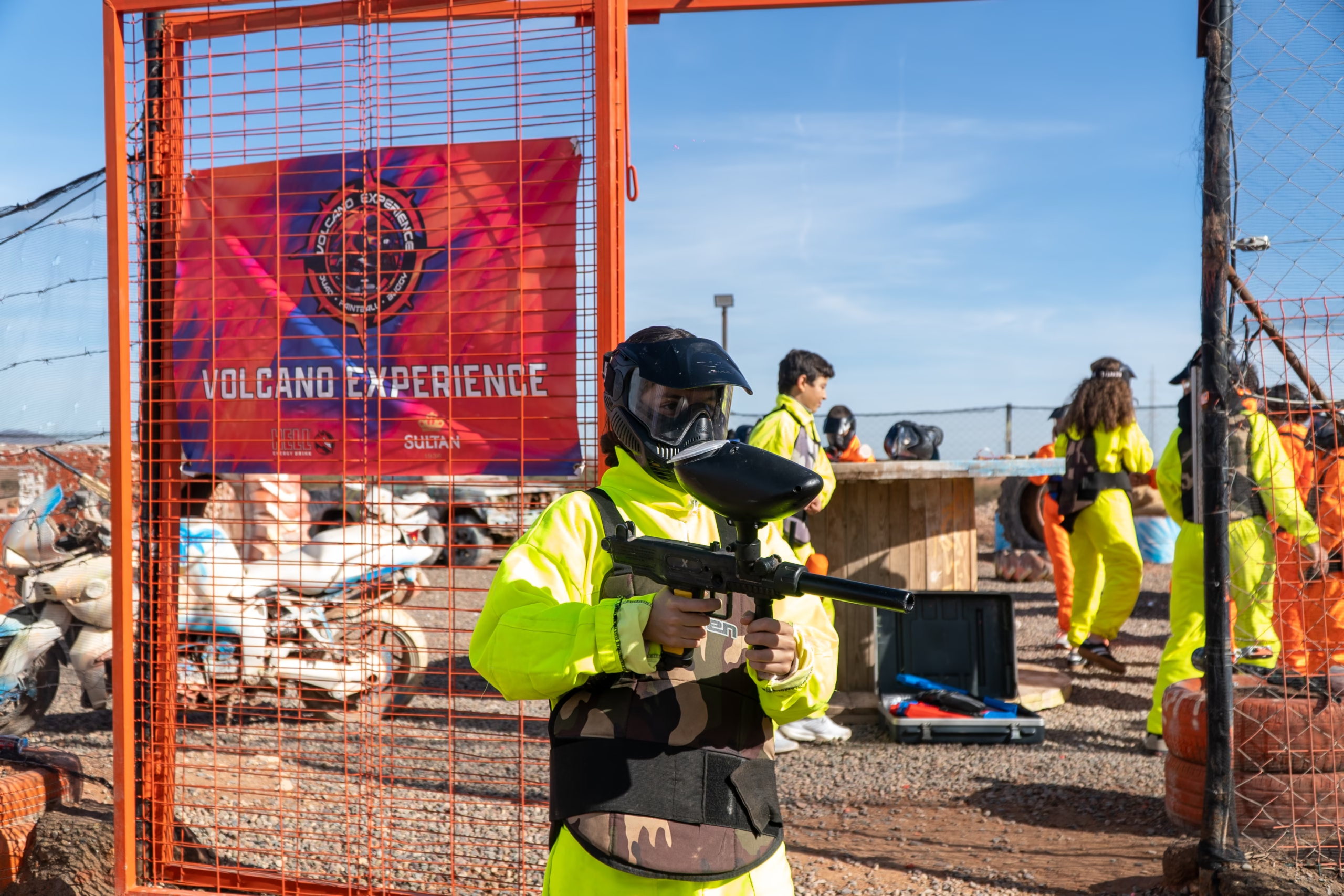
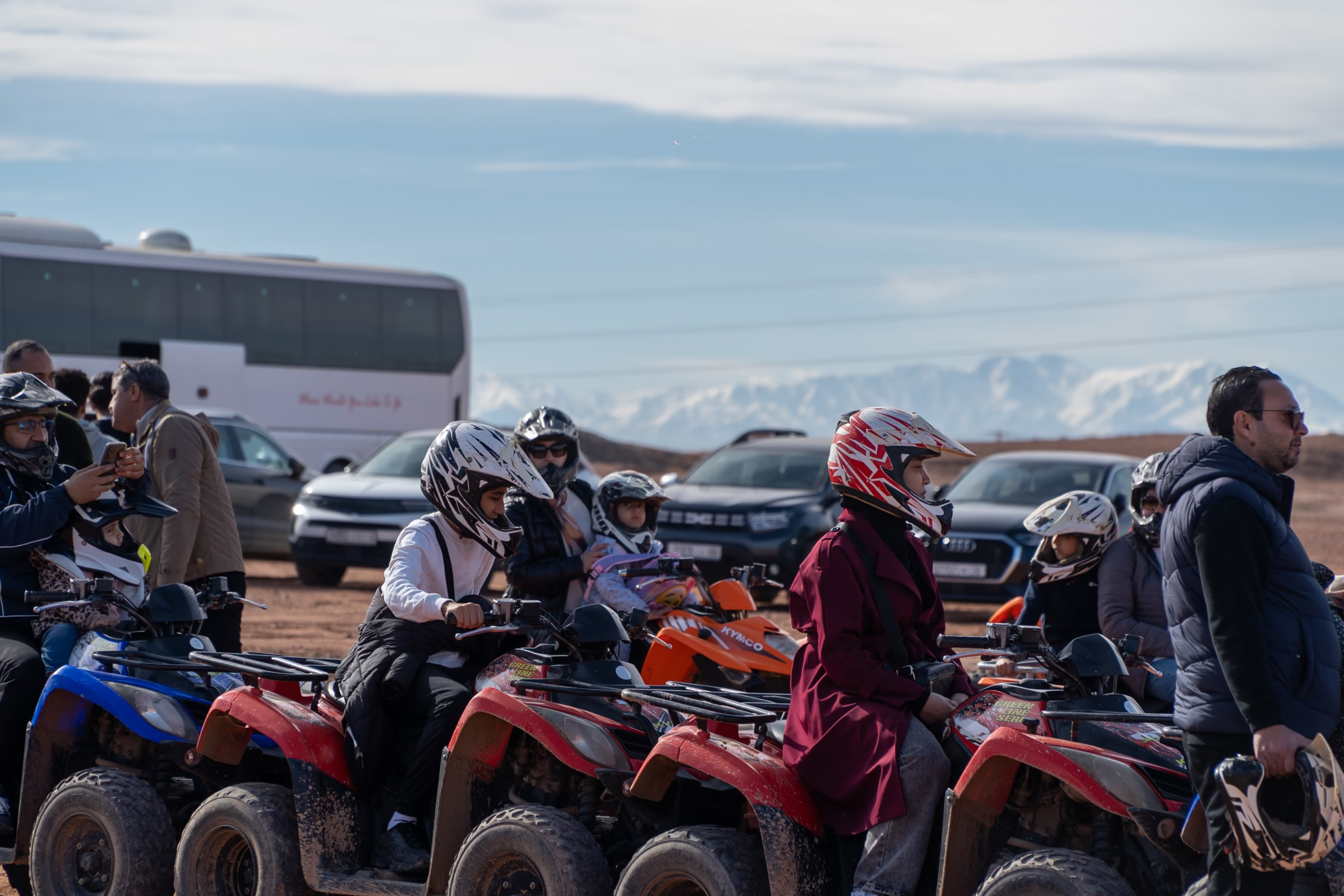
Paintball can introduce strategy, communication, and friendly competition when structured around teams and shared objectives. Quad biking can provide a shared adventure component and a change of energy. Short team challenges can create collaborative or competitive moments between larger activities.
A multi-activity format can add variety through different energy levels and forms of participation. It should still be adapted to the company’s objective, group, and available time rather than treated as a fixed universal package.
Companies can review team building activities in Marrakech while considering the experience-quality principles in this guide.
Questions to Discuss Before the Event
Discuss the objective, participant profile, desired intensity, competition level, duration, group size, activity variety, relevant accessibility needs, breaks, and intended ending.
The conversation should answer: Will most people remain involved? How will different participants contribute? How will the event close?
For provider-comparison criteria rather than experience design, add : How to Choose the Best Team Building Company in Marrakech
FAQ: What Makes Corporate Team Building Successful?
What makes a team building event successful?
A successful event has one clear purpose, active participation, appropriate challenge, inclusive roles, understandable instructions, balanced pacing, smooth transitions, and suitable closure. Its success should be judged against the original objective and participant experience rather than activity count, venue cost, or spectacle.
How do you make team building enjoyable for employees?
Choose activities that fit the group, explain the purpose without overusing corporate speeches, keep waiting low, offer different ways to contribute, and use competition carefully. Employees are more likely to enjoy the event when interaction develops naturally and participation does not require forced enthusiasm or emotional disclosure.
Why do some team building events feel forced?
They often tell employees how to feel, use activities unrelated to the group, demand public enthusiasm, or turn every moment into a corporate lesson. A clearer purpose, appropriate activity, concise messaging, and natural interaction make the experience feel more credible.
How much competition should a team building event include?
Use enough competition to create focus and energy without turning the event into a high-pressure workplace test. Friendly scoring, fair rules, and team objectives usually work better than excessive emphasis on winners. Some events need no final winner and can end with a shared challenge.
Should everyone participate in the same activity?
Not necessarily. Mixed groups may benefit from rotations, alternative roles, or varied activities. The goal is meaningful contribution, not identical participation. Avoid designs that publicly isolate employees who have different confidence, fitness, experience, or accessibility needs.
How long should team building activities last?
There is no universal duration. A round should be long enough for participants to understand the task, develop a strategy, and contribute, but not so long that energy falls or waiting grows. Duration should also account for briefing and transitions, not only active play.
Why is event pacing important?
Pacing manages energy. Constant intensity can exhaust participants, while long pauses reduce attention. A strong experience alternates effort, variety, transition, recovery, and renewed activity before reaching a clear ending.
Does team building need a debrief?
Not always. Reward or recreational events may need only a closing moment. A brief debrief can help when the objective involves communication, leadership, collaboration, or problem-solving. Keep it proportional and avoid turning a casual event into forced corporate therapy.
How do you make team building inclusive?
Understand the participant group, choose an appropriate intensity, provide different ways to contribute, and avoid letting the same abilities dominate every challenge. Strategy, observation, communication, coordination, leadership, and support can all become meaningful roles.
How can companies evaluate a team building event afterward?
Compare the experience with its purpose. Review participation, interaction, waiting, clarity, pacing, and feedback. Ask employees whether they felt involved, whether the activities encouraged interaction, what was confusing, and what should change next time.
Build a Team Building Experience Around Your Team
A great corporate team building experience is not defined by the biggest budget or most extreme activity. It is defined by how purpose, participation, challenge, inclusivity, facilitation, pacing, transitions, shared moments, and closure work together.
Companies planning team building in Marrakech can discuss their objective, group size, preferred date, duration, and desired activity style through Volcano Experience’s corporate team building in Marrakech page or contact Volcano Experience directly.