
Team Building Marrakech: The Complete Guide for Companies (2026)
Quick answer: Team building in Marrakech works best when the event is built around a clear business goal, not simply a list of activities. Companies can choose outdoor formats such as paintball, quad biking, team challenges, treasure hunts and collaborative games. A successful program matches the activities to the group, divides participants into balanced teams, uses planned rotations, includes proper safety briefings and ends with a short review or celebration.
Team building can improve how people communicate, solve problems and work across departments. But those results depend on planning. This guide explains how to define the objective, choose activities, manage groups and logistics, compare providers and avoid the mistakes that weaken many corporate events in Marrakech.
Table of Contents
- What is team building?
- Why is team building important for companies?
- Why choose Marrakech for team building?
- Which team building activities work best in Marrakech?
- How do you organize a successful team building event?
- How do you choose the right team building company?
- Should you combine several activities in one package?
- Which planning mistakes should companies avoid?
- Frequently asked questions
- Final thoughts
What Is Team Building?
Team building is a planned activity or series of activities designed to improve how a group works together. It creates a setting where people can practise communication, coordination, leadership and decision-making outside their usual workplace roles.
It is different from a company party. A party can reward employees and help them relax, but it does not necessarily change how they collaborate. Team building includes a goal, a structure and a reason for asking people to complete a task together.
For example, a paintball match becomes a team-building activity when each group must assign roles, agree on a plan, share information and adapt during the game. Without that structure, it is simply a recreational match.
Why do companies organize team building?
Companies usually organize team building to:
- help new colleagues get to know one another;
- improve communication between departments;
- rebuild trust after a difficult period;
- develop future leaders;
- practise problem-solving under time pressure;
- welcome employees after a merger or reorganization;
- reward a team after an important project;
- reconnect remote or hybrid colleagues;
- support a company meeting, retreat or annual celebration.
The objective should be specific enough to guide the event. “Improve communication” is too broad on its own. A better objective might be: “Help the sales and operations teams share information faster,” or “Give quieter employees more opportunities to contribute to group decisions.”
This distinction matters. SHRM describes effective team-building activities as structured interactions that help employees develop trust, shared understanding and communication away from the pressure of live work. It also warns that activities chosen only because they sound fun often have little lasting effect. The useful starting question is: What behaviour are we trying to strengthen? (SHRM team-building and engagement guide).
Why Is Team Building Important for Companies?
Team building is not a substitute for fair management, clear roles or good working conditions. A single event cannot repair a serious culture problem. It can, however, create a practical space where employees test better ways of working and see colleagues from a different perspective.
How can team building improve communication?
Many workplace communication problems are not caused by a lack of technical skill. People may hesitate to ask for help, assume that another department understands their priorities or pass information too late.
A well-designed challenge makes these habits visible. If a team must move through several checkpoints with incomplete information, its members quickly learn that unshared knowledge slows everyone down. The lesson is experienced, not presented on a slide.
During the review, the facilitator can ask simple questions: What information did you need? Who had it? When did the plan become clear? Those questions connect the activity to daily work.
How does it develop leadership?
Team building gives people a low-risk opportunity to lead. A manager may step back while another employee organizes the plan, delegates roles or keeps the group calm.
This can reveal strengths that job titles hide. It also allows current managers to observe whether they listen, control every decision or create room for others to contribute.
Leadership should rotate when possible. If the most senior person leads every activity, the event may reproduce the office hierarchy instead of helping the team learn something new.
How does it build trust?
Trust grows when people behave reliably, communicate honestly and show that they can contribute. The Center for Creative Leadership describes trust through character, communication and capability. These dimensions help explain why a shared task can be useful: colleagues see one another keep promises, exchange information and use different skills (CCL on building trust at work).
Trust exercises should not force personal disclosure or make participants uncomfortable. A practical coordination task is often more useful than an artificial “trust fall.” The aim is to create evidence that teammates can depend on one another.
How does it strengthen problem-solving?
Good team challenges include a clear goal, limited resources and enough uncertainty to require discussion. Participants must test ideas, notice errors and change direction.
For example, a treasure hunt can require several groups to combine clues. A fast team that refuses to share information may lose to a slower team that collaborates. That creates a direct lesson about local optimization: winning one task does not always help the whole organization.
Can it improve employee engagement and motivation?
Team building can support engagement when it reinforces belonging, recognition, useful relationships and shared purpose. It should not be presented as a cure for disengagement.
Gallup defines engagement as an employee’s connection to their work, team and organization. Its research consistently links stronger engagement with better business outcomes. In a 2024 meta-analysis covering 183,806 teams, top-quartile teams were more productive and profitable than bottom-quartile teams (Gallup’s science of high-performing teams).
The responsible conclusion is not that one outdoor event will raise productivity by a fixed percentage. It is that relationships, clarity and management matter. A team-building day can support those factors when managers follow up afterward.
How does it affect company culture?
Culture is shaped by repeated behaviour. An event can make desired behaviour concrete.
If a company says it values collaboration, the activities should reward shared success rather than only the strongest individual. If it values inclusion, every participant should have a meaningful role. If it values learning, teams should be allowed to test, fail safely and try again.
The closing discussion matters here. Ask each team to name one behaviour worth carrying back to work. Then assign a manager to check whether it is being used two or three weeks later.
Why Choose Marrakech for Team Building?
Marrakech combines practical access, varied outdoor terrain and a strong hospitality sector. A company can organize a focused half-day near the city or build a longer program around meetings, accommodation and group activities.
Does Marrakech offer enough variety?
Yes. The region supports several formats without forcing every company into the same experience. Options include paintball, quad routes, team missions, treasure hunts, outdoor games, culinary workshops, cultural discovery and meeting-based retreats.
This variety is useful when a group includes different ages, physical abilities or comfort levels. One group might want competition and movement. Another may need a slower collaborative format.
Is the weather suitable for outdoor activities?
Marrakech offers many clear days, but the season and time of day still matter. Summer afternoons can be hot. Winter mornings and evenings can feel cold, especially in open areas.
For warmer months, an early morning or late afternoon program is usually more comfortable. Organizers should provide water, shaded rest areas and realistic breaks. Weather should be treated as a planning variable, not an afterthought.
Is Marrakech accessible for corporate groups?
Marrakech has an international airport, a railway station and a large range of hotels and meeting venues. That makes it practical for teams arriving from other Moroccan cities or from abroad.
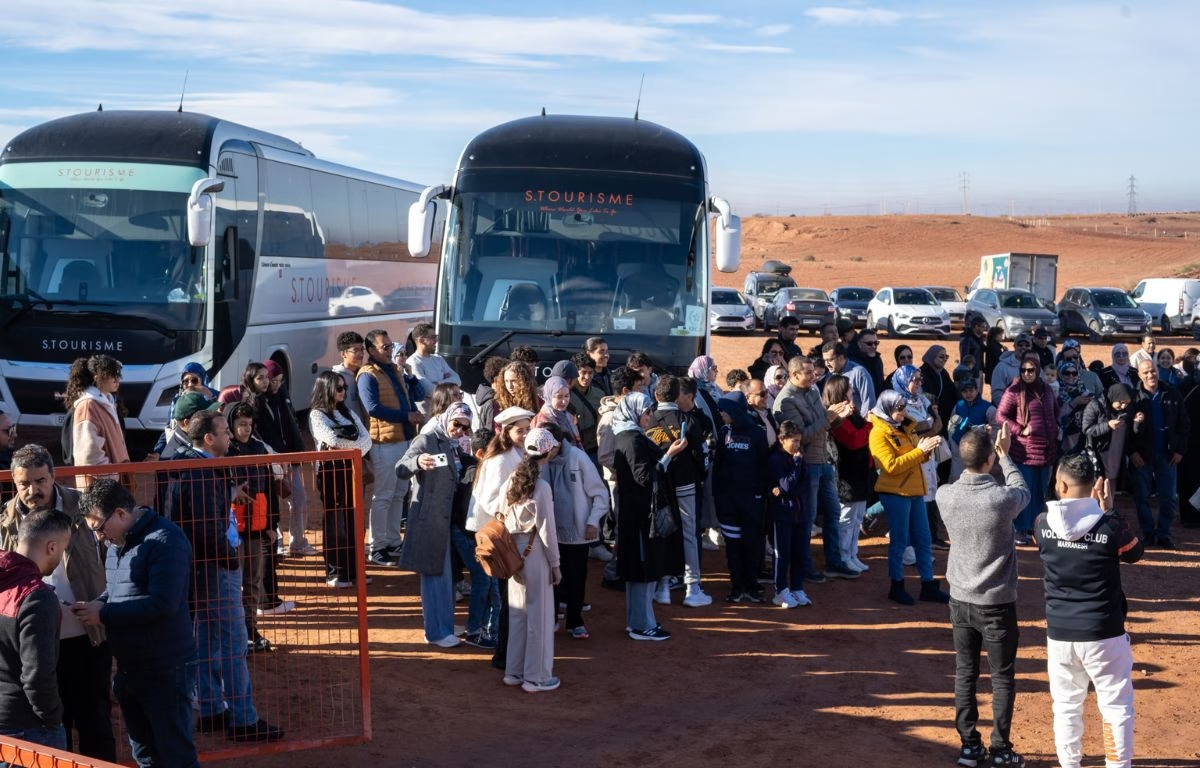
The key logistical question is not simply the distance from the city centre. Ask how long the transfer takes at the planned hour, what vehicle is required, where coaches can park and whether all participants will travel together.
What makes the setting different from an office event?
A change of environment interrupts routine. Employees who normally interact through email or formal meetings encounter one another in a more direct setting.
Marrakech also allows companies to combine work and place. A corporate meeting can be followed by an outdoor challenge, a shared meal or a cultural activity. The destination supports the program, but it should not distract from the business objective.
Which Team Building Activities Work Best in Marrakech?
There is no universally “best” activity. The right choice depends on the objective, group size, available time, participant profile and desired level of physical intensity.
The table below provides a quick comparison.
| Activity | Works well for | Typical group format | Main benefits |
|---|---|---|---|
| Paintball | Strategy and communication | Teams with rotating matches | Role clarity, planning, adaptation |
| Quad biking | Shared adventure and observation | Guided groups or rotations | Confidence, attention, shared memory |
| Team challenges | Mixed groups and broad participation | Small teams at stations | Coordination, trust, problem-solving |
| Treasure hunt | Communication across roles | Several teams following clues | Information sharing, planning, creativity |
| Adventure activities | Energy and resilience | Guided groups by ability | Confidence, mutual support |
| Rage room | Short, unusual break | Small rotations | Release, novelty, conversation |
| Outdoor games | Inclusive participation | Stations or team tournament | Energy, cooperation, accessibility |
| Collaborative challenges | Cross-department cooperation | Teams with a shared final goal | Systems thinking, shared ownership |
Why does paintball work for team building?
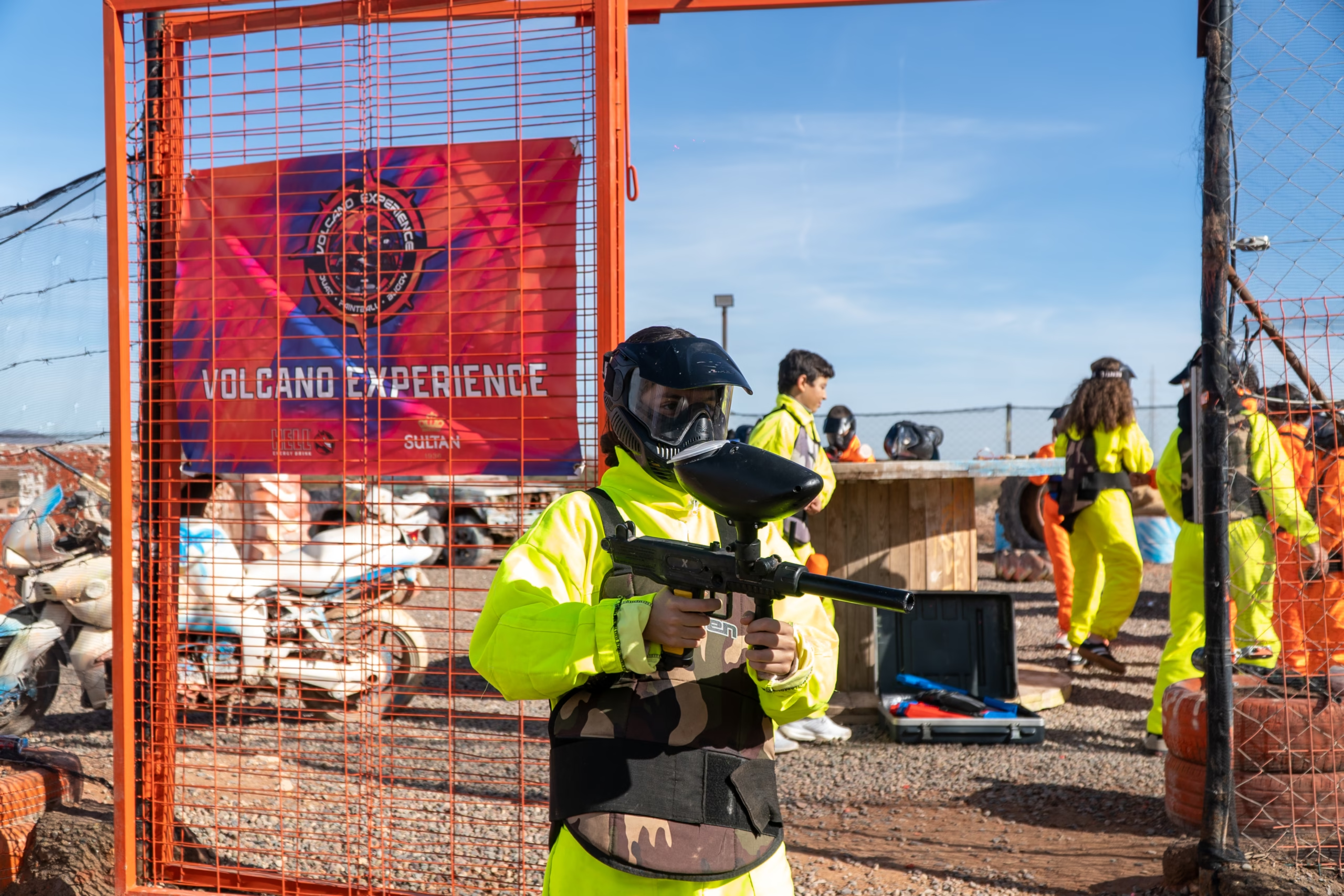
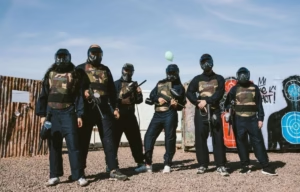
Paintball creates a clear objective and immediate feedback. Teams must decide who will defend, move, observe and communicate. A plan that looks good before the match may need to change within minutes.
Best group size: It works well with medium and large groups when matches, teams and waiting time are carefully managed. Large groups should use a rotation system rather than putting everyone into one uncontrolled game.
Main benefits: strategic thinking, role assignment, communication under pressure and rapid adaptation.
Example: A company with 48 participants can create four teams of 12. Two teams play while the others complete a separate challenge, then rotate. This keeps people active and allows a final ranking based on more than one skill.
The facilitator should explain that aggressive play is not the objective. Safety rules, protective equipment, field supervision and clear boundaries are essential.
Why does quad biking work for corporate groups?
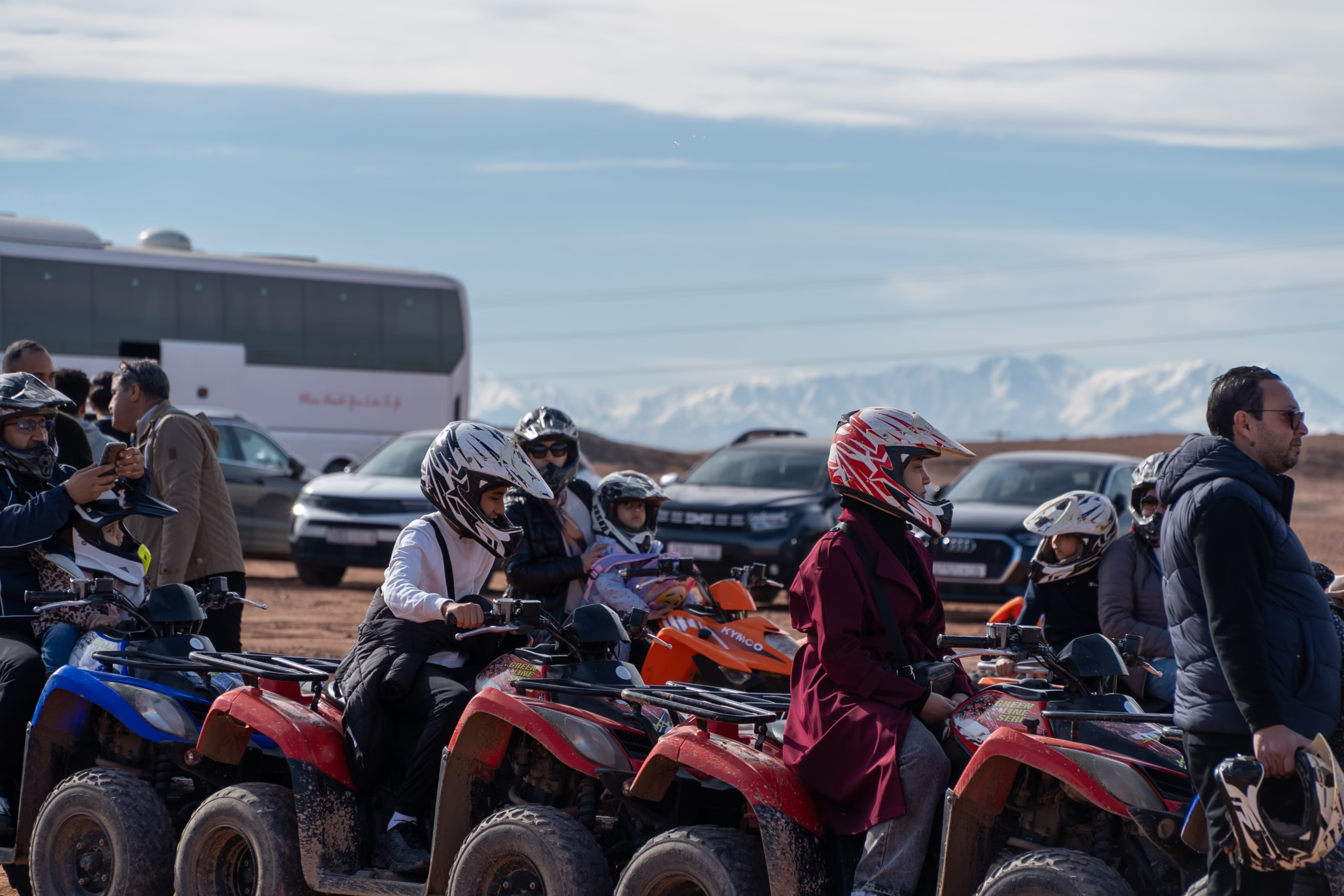
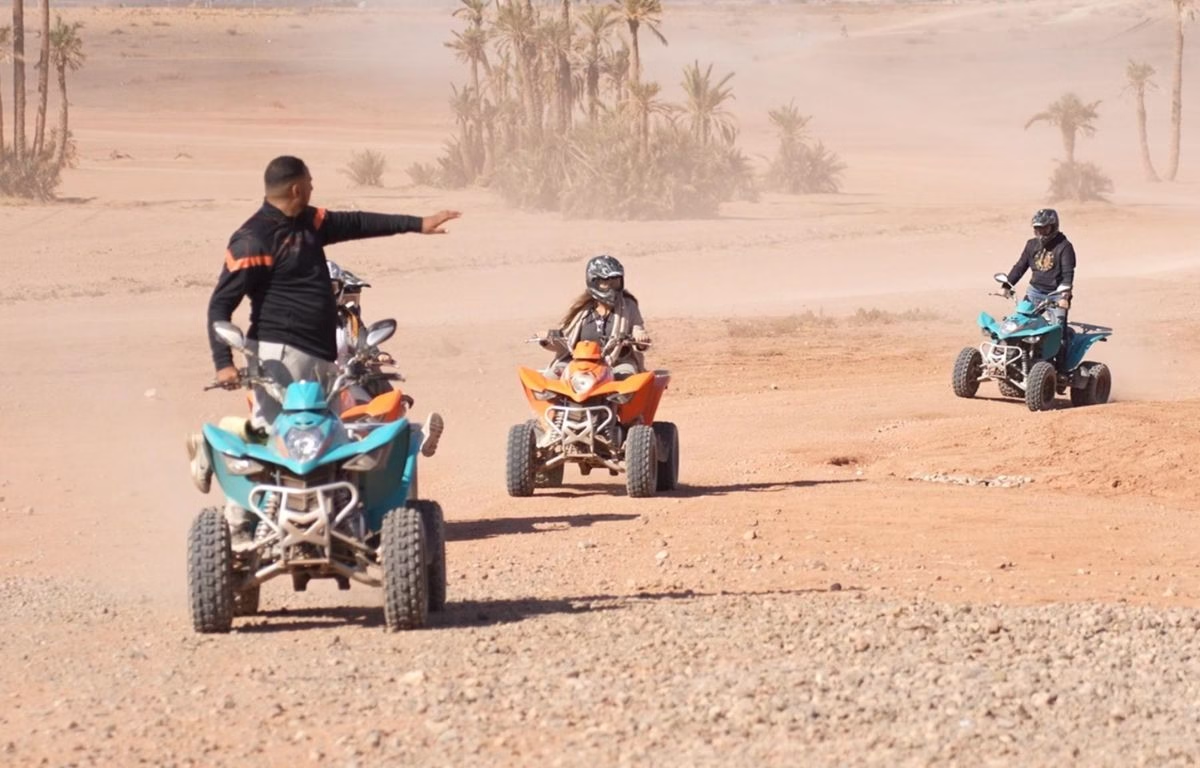
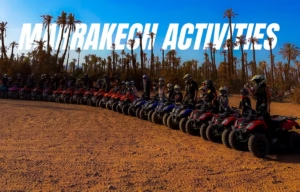
Quad biking offers a shared outdoor experience that is easy to remember. It can also become more purposeful when the route includes observation points, questions, checkpoints or team missions.
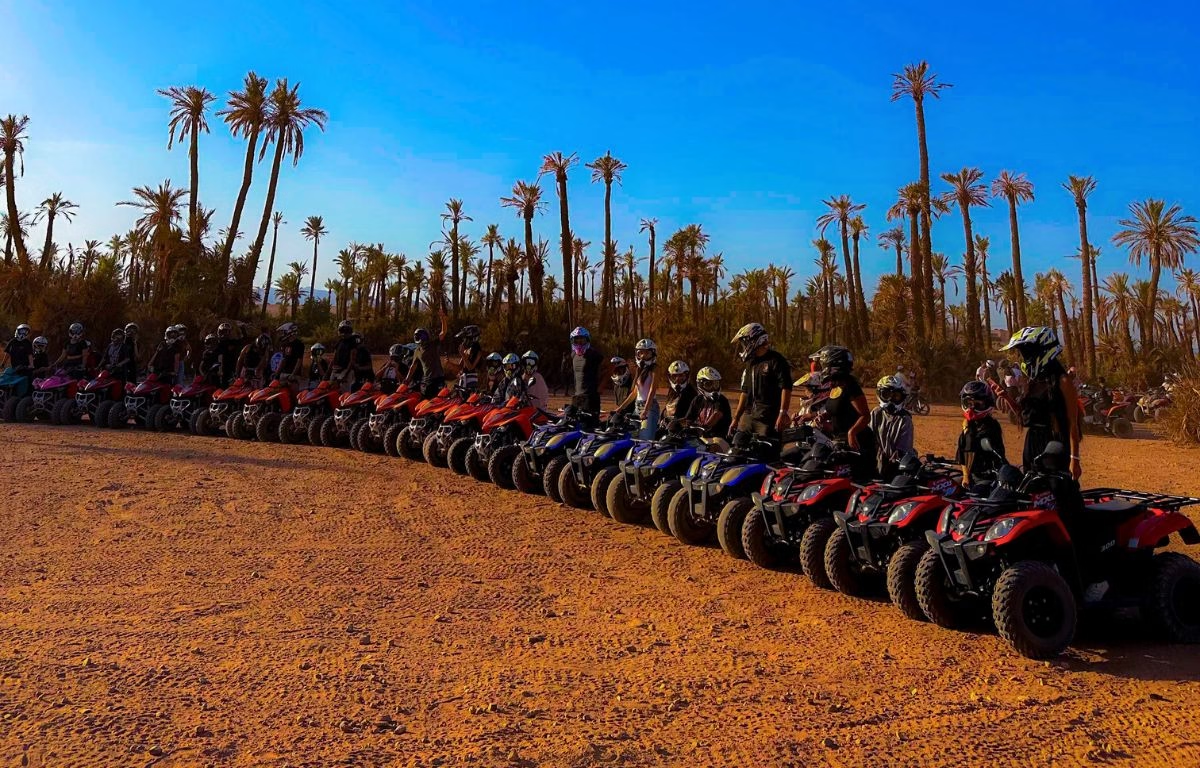
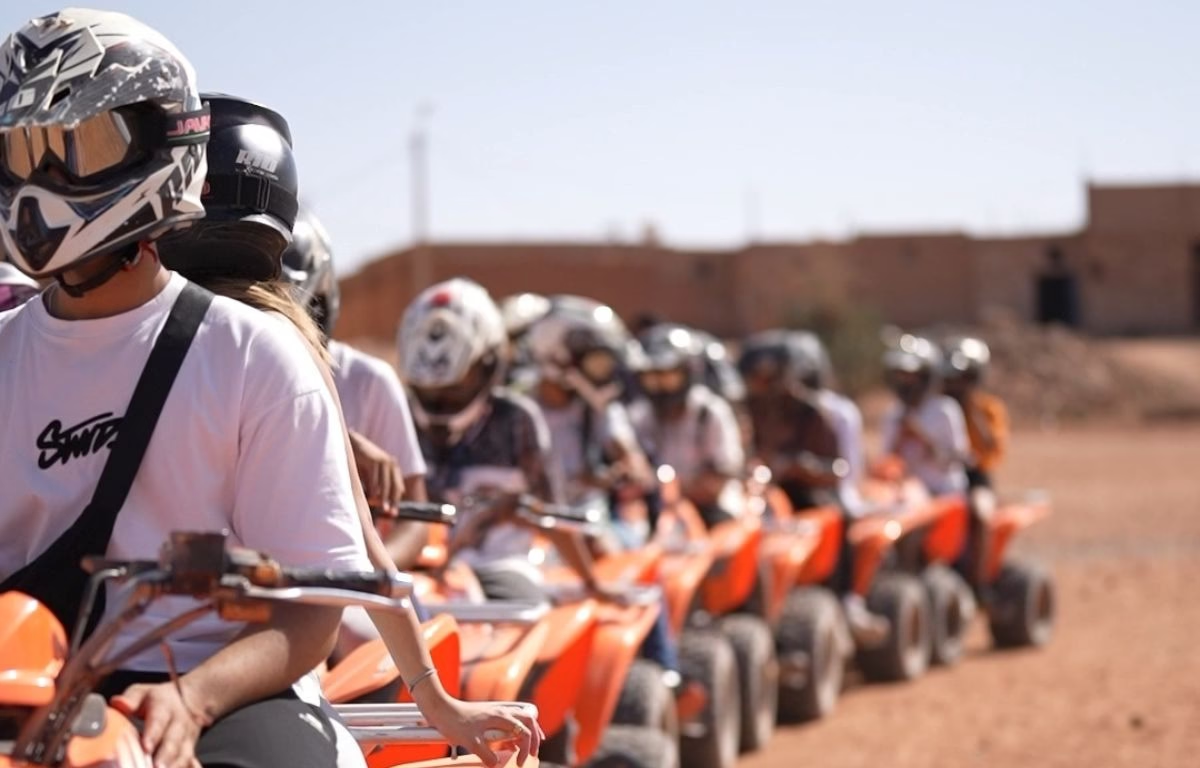
Best group size: Small groups can ride together. Larger groups need scheduled waves and a parallel activity so participants are not waiting without direction.
Main benefits: confidence, attention, mutual encouragement and a shared experience outside normal roles.
Example: During a quad team mission, participants follow a guide and record information at checkpoints. The winning score can combine correct answers, safe participation and team coordination rather than speed.
Driving ability varies. The provider should explain controls, provide helmets, assess participants before departure and offer an alternative role or activity to anyone who prefers not to ride.
When should you use team challenges?
Team challenges are flexible and can be adapted to the objective. They may test memory, precision, trust, speed, coordination or communication.
Best group size: Almost any group size, provided participants are divided into small teams. Teams of roughly six to ten people usually allow everyone to contribute.
Main benefits: broad participation, problem-solving and visible teamwork habits.
Example: One person sees a model while the rest of the team must rebuild it using only verbal instructions passed through several members. The task exposes where information becomes unclear.
Challenges should be short enough to maintain energy and different enough to reward more than physical ability.

Why are treasure hunts useful?
A treasure hunt connects movement, information and problem-solving. It can be adapted to a venue, outdoor base or selected area of Marrakech.
Best group size: Small to large groups divided into teams. The route must be designed to avoid congestion at the same clue.
Main benefits: planning, information sharing, creativity, time management and local discovery.
Example: Each team receives only part of the information. It can score some points alone, but the final challenge requires teams to combine their clues. This shifts the lesson from competition to company-wide collaboration.
The organizer should test the route, confirm permissions where needed and prepare a backup for weather, traffic or inaccessible checkpoints.
Which adventure activities are suitable?
Adventure activities can include off-road experiences, guided missions or other outdoor formats. They work best when the physical requirements are clear before booking.
Best group size: Depends on equipment capacity and supervision. Rotation planning is essential for large groups.
Main benefits: confidence, resilience, peer support and shared memories.
Example: A new management group completes an unfamiliar guided activity, then discusses how each person reacted to uncertainty. The discussion makes the experience relevant to leading change.
No employee should be pressured into an activity they consider unsafe or unsuitable. An equivalent alternative preserves inclusion.
Can a rage room be part of team building?
A rage room is best used as a short complementary activity, not the central method for teaching teamwork. Its value is novelty and a change of pace.
Best group size: Small teams in planned rotations.
Main benefits: an unusual shared moment, informal conversation and variety within a longer program.
Example: While one small group uses the rage room under supervision, other teams complete precision or communication challenges. Scores from each station contribute to the final result.
Protective equipment, activity rules, controlled items and staff supervision are required. Companies should also provide an easy opt-out.
Why do outdoor games work for mixed groups?
Outdoor games can be designed at low, medium or high intensity. This makes them useful for groups with different fitness levels and preferences.
Best group size: Flexible, especially when games are organized as stations.
Main benefits: participation, energy, coordination and informal connection.
Example: A 100-person event can use ten teams and five stations. Each team follows a timetable, meets different opponents and collects points. Clear rotation prevents long queues.
Avoid designing the entire day around speed or strength. Include memory, precision, logic and communication so different people can contribute.
What are collaborative challenges?
Collaborative challenges give several teams a shared final objective. Groups may compete during early stages but must exchange resources or combine results at the end.
Best group size: Particularly useful for large companies, multiple departments and groups that work in silos.
Main benefits: shared ownership, negotiation, systems thinking and cross-team communication.
Example: Sales, finance and operations teams each earn different materials. No department can complete the final construction alone. The lesson is clear without a lecture: local success is not organizational success.
How Do You Organize a Successful Team Building Event?
A successful event is designed backwards from the result. Start with what should change, then choose the activity and logistics that support it.
1. What objective should you set?
Choose one primary objective and, at most, two secondary objectives. Too many goals produce a vague program.
Ask:
- What is happening inside the team now?
- Which behaviour would improve daily work?
- What should participants understand or practise?
- How will managers follow up?
For a newly merged team, the objective may be relationship-building. For an established leadership team, it may be decision-making under uncertainty.
2. What participant information do you need?
Confirm the expected and maximum attendance, languages, departments, age range, accessibility needs, dietary requirements and any relevant medical or mobility constraints participants choose to disclose.
Do not assume that everyone wants a high-intensity activity. Ask privately about participation needs and prepare equivalent alternatives.
3. How should you set the budget?
Budget for the whole event, not only the advertised activity price. Include:
- activities and facilitation;
- transport;
- food and water;
- venue or meeting space;
- audiovisual equipment;
- photography or branding;
- awards, if used;
- contingency for changes in attendance or timing.
Ask whether pricing is per person, per vehicle, per team or for the complete program. Confirm taxes, deposits, cancellation conditions and the final payment schedule in writing.
4. How should activities be selected?
Use three filters: objective, inclusion and operational capacity.
If the goal is communication, choose tasks that require information exchange. If the goal is trust, use interdependent tasks. If the group is large, select activities that can run simultaneously or in reliable rotations.
Do not choose solely from photos. A visually exciting activity may be a poor fit if half the group spends the day waiting.
5. How should teams be created?
Balanced teams usually work better than self-selected groups. Mix departments, seniority levels and personalities when the objective is cross-company connection.
Avoid placing one executive with a group that may become silent around them unless the activity deliberately addresses hierarchy. Consider rotating the team leader so authority is shared.
Names, colours, flags or wristbands make teams easier to manage. Prepare the allocations before arrival for large events.
6. What logistics should be confirmed?
Create one written event sheet containing:
- arrival and departure times;
- transport contact and meeting point;
- event manager and provider contact;
- participant count;
- team list;
- activity rotation;
- food schedule;
- equipment needs;
- safety and emergency information;
- weather backup;
- closing time.
Send participants a shorter version explaining what to wear, what to bring and when to arrive.
7. How much time should you allow?
Do not fill every minute. Registration, bathroom breaks, hydration, moving between stations and group photos all take time.
A realistic half-day may include arrival, briefing, team division, two activity rotations, a break, a final challenge and closing. At Volcano Experience, for example, corporate programs can follow a coordinated journey from welcome and team division through selected activities, challenges and a final group moment. The published formats cover half-day, extended-day and custom programs for groups of 20 to 200 (team-building programs in Marrakech).
For 100 participants, a ten-minute delay at each transition can remove a full activity from the schedule. Assign a timekeeper and make team movement obvious.
8. What safety questions should you ask?
Ask the provider to explain:
- activity-specific briefing procedures;
- protective equipment and maintenance;
- staff-to-participant supervision;
- route or field controls;
- first-aid arrangements;
- emergency access and communication;
- weather limits;
- alternatives for non-participants.
Safety is not a paragraph in a proposal. It should be visible in the schedule, staffing and equipment.
9. How should the event end?
Use a short closing that connects the experience to work. It does not need to feel like training.
Ask each team:
- What helped you succeed?
- What slowed you down?
- What should we take back to work?
Then recognize useful behaviours, not only the team with the highest score. Awards can include best communication, best recovery after a mistake or strongest collaboration.
10. What should happen after the event?
Send a short survey within 24 to 48 hours. Ask whether the objective was clear, everyone could participate and the program was well managed. Include one question about what should change at work.
Two or three weeks later, managers should revisit the agreed behaviour. Without follow-up, the event may remain a positive memory rather than become a useful intervention.
How Do You Choose the Right Team Building Company?
Compare providers on their ability to design and manage the event, not only on their activity list.
What experience should the provider demonstrate?
Ask for examples involving a similar group size and format. Managing 20 people is different from managing 150.
Useful evidence includes sample schedules, rotation plans, photos from real corporate events and an explanation of what changes when attendance increases.
How should safety be evaluated?
Request concrete answers about briefings, protective equipment, staff, maintenance, emergency procedures and activity limits. A provider should be willing to explain what happens if weather changes or a participant opts out.
How much customization is necessary?
Customization does not mean adding a company logo to a standard game. It means adjusting the activity mix, difficulty, language, teams, scoring, timing and closing discussion to the company’s objective.
Ask the provider to explain why each proposed activity belongs in the program.
Can the provider manage the entire group?
For large groups, request the rotation table before booking. It should show where every team will be at every stage, how long transitions take and which staff member leads each station.
A beautiful venue cannot compensate for two hours of waiting.
What should you check in reviews?
Look beyond the average score. Search for comments about staff organization, safety, communication, punctuality, equipment condition and handling of large groups.
Recent reviews are more useful than old ones. Reviews from corporate groups are more relevant than reviews from individual visitors.
Which facilities matter?
Depending on the program, check parking, coach access, toilets, shade, seating, drinking water, meal areas, meeting space, electricity and mobile coverage.
Ask for current photos or visit the location if the event is important or complex.
What should a complete proposal contain?
A useful proposal should state:
- objectives and recommended format;
- activities and durations;
- minimum and maximum attendance;
- team and rotation plan;
- included equipment;
- safety arrangements;
- transport and catering details;
- total price and exclusions;
- deposit, cancellation and weather terms;
- one responsible contact.
If important details remain verbal, confirm them by email before paying a deposit.
Should You Combine Several Activities in One Package?
Combining activities can keep energy balanced and reveal different strengths. Paintball may reward strategic communication, while a precision challenge rewards patience and a collaborative puzzle rewards listening.
Multiple activities are especially useful for larger or mixed groups. They create parallel stations, reduce waiting and allow participants who dislike one format to contribute elsewhere.
What does a good half-day package look like?
A focused half-day often works well with two activities plus briefing, transitions and closing. For example, a group might combine quad biking with paintball, or quad biking with team challenges.
Volcano Experience presents separate half-day formats for smaller teams of 20–50 and larger groups of 50–100 or more. The larger format uses selected activities and group rotations. This is a useful operational distinction: the same package should not simply be enlarged without changing how it runs.
When is a full-day format better?
A longer program suits groups with several objectives, participants arriving from different locations or companies combining meetings with activities.
A full day can include an opening, activities, challenges, food, music and a closing moment. Volcano Experience’s extended format is designed for 40–200 participants, while its custom option can combine quad, paintball, buggy, rage room, private challenges, catering, DJ, branding and photography. These choices should support the event goal rather than fill the schedule.
Readers who want to compare these formats can review the complete Volcano Experience corporate team-building options. The broader Volcano Experience website also shows the individual activities that may be combined.
How many activities are too many?
More is not always better. Three well-managed stages are more useful than six rushed activities.
Count the full time required for briefing, equipment changes, movement and recovery. If participants cannot understand the rules or reflect on what happened, the program is too crowded.
Which Planning Mistakes Should Companies Avoid?
Mistake 1: Choosing an activity before defining the objective
This produces an event that may be enjoyable but disconnected from work. Define one desired behaviour first, then choose the format.
Mistake 2: Designing only for athletic participants
Some employees may have mobility constraints, health concerns or simply dislike intense competition. Offer meaningful alternatives and combine physical tasks with logic, memory, precision and creative challenges.
Mistake 3: Ignoring group rotations
This is one of the most common large-event failures. Confirm capacity per station, transition time and the location of every team throughout the program.
Mistake 4: Treating travel time as free time
Traffic, hotel pickup and late arrivals can shorten the event. Build the transport plan into the schedule and choose one decision-maker for departure.
Mistake 5: Overloading the program
An ambitious activity list often creates rushed briefings and late meals. Protect the most important stages and keep buffer time.
Mistake 6: Making competition the only measure of success
Competition can raise energy, but it may also encourage dominant personalities. Reward communication, recovery, inclusion and collaboration as well as points.
Mistake 7: Allowing managers to dominate
If senior leaders make every decision, the event teaches the same pattern employees already experience. Rotate leadership or set rules that require input from every person.
Mistake 8: Failing to explain safety and participation requirements
Employees should know the clothing, footwear, physical level and rules before arrival. Surprises reduce participation and trust.
Mistake 9: Skipping the closing discussion
Without a short review, participants may not connect the activity to work. Three focused questions are enough to make the learning visible.
Mistake 10: Expecting one event to fix a management problem
Team building cannot compensate for unclear roles, poor communication from leaders or unresolved conflict. Use the event as one part of a wider effort, then follow up through daily management.
Frequently Asked Questions About Team Building in Marrakech
How much does team building in Marrakech cost?
The cost depends on group size, activities, duration, transport, catering, venue requirements and custom extras. Request a complete written quote that states what is included and whether pricing is per participant, vehicle or program.
What is the ideal group size for team building?
There is no single ideal size. Groups of 20–50 are easier to manage together. Groups of 50–200 can work well with smaller teams, parallel stations and a detailed rotation schedule.
How long should a team-building event last?
A half-day is suitable for one clear objective and two main activities. A full or extended day is better when the program includes meetings, several activities, meals and a formal closing.
What are the best team-building activities in Marrakech?
Popular options include paintball, quad biking, treasure hunts, outdoor games, team challenges and collaborative missions. The best choice is the one that fits the group and objective.
Can team building be organized for 100 or 200 people?
Yes, but the provider must use team divisions, activity capacities, parallel stations and timed rotations. Ask to see the operating plan before confirming.
Is team building suitable for schools and universities?
Yes. The activities, supervision, safety procedures and learning goals should be adapted to participant age and the institution’s requirements.
Can activities be customized for our company?
Most well-organized programs can adapt team names, challenges, scoring, timing, language, branding and activity mix. Customization should support the objective, not just appearance.
What should participants wear?
Comfortable clothing, closed shoes and weather-appropriate layers are usually suitable for outdoor events. The provider should send activity-specific instructions in advance.
Is transport from central Marrakech available?
Many organizers can arrange transport or coordinate with a transport company. Confirm pickup points, journey time, vehicle capacity and return schedule in writing.
What happens if the weather changes?
Ask for the provider’s weather policy before booking. A good plan may adjust the start time, replace an activity or use a backup format. Cancellation and rescheduling conditions should be written into the agreement.
Are outdoor team-building activities safe?
They can be conducted safely when the provider uses maintained equipment, trained supervision, clear briefings, protective gear and appropriate activity limits. Companies should ask for specific procedures rather than general assurances.
Can employees opt out of an activity?
They should be able to. Provide an equivalent role or alternative activity so opting out does not isolate or embarrass anyone.
How far in advance should we book?
For a small weekday group, a few weeks may be enough depending on availability. Large events, weekends and programs requiring transport, catering or branding should be planned earlier.
How do we measure whether team building worked?
Compare the event with the objective. Use a short participant survey, facilitator observations and a manager follow-up after two or three weeks. Measure a relevant behaviour, not just whether people enjoyed the day.
Can a team-building event include food, music and awards?
Yes. Catering, a DJ or musical opening, photography and awards can support an extended event. They should be scheduled around the team program and included clearly in the proposal.
What Should You Do Next?
The strongest team-building programs begin with a clear reason for bringing people together. They match the activity to the group, make participation accessible, manage every transition and connect the experience back to work.
Marrakech gives companies a broad choice of outdoor settings and activities. The value, however, comes from the design: balanced teams, purposeful challenges, safe operations and thoughtful follow-up.
If you are comparing formats for a company, school, university or association, explore Volcano Experience’s team-building services in Marrakech. Share your group size, preferred date, business objective and any participation needs. That gives the event team enough information to recommend a realistic half-day, extended-day or custom program.