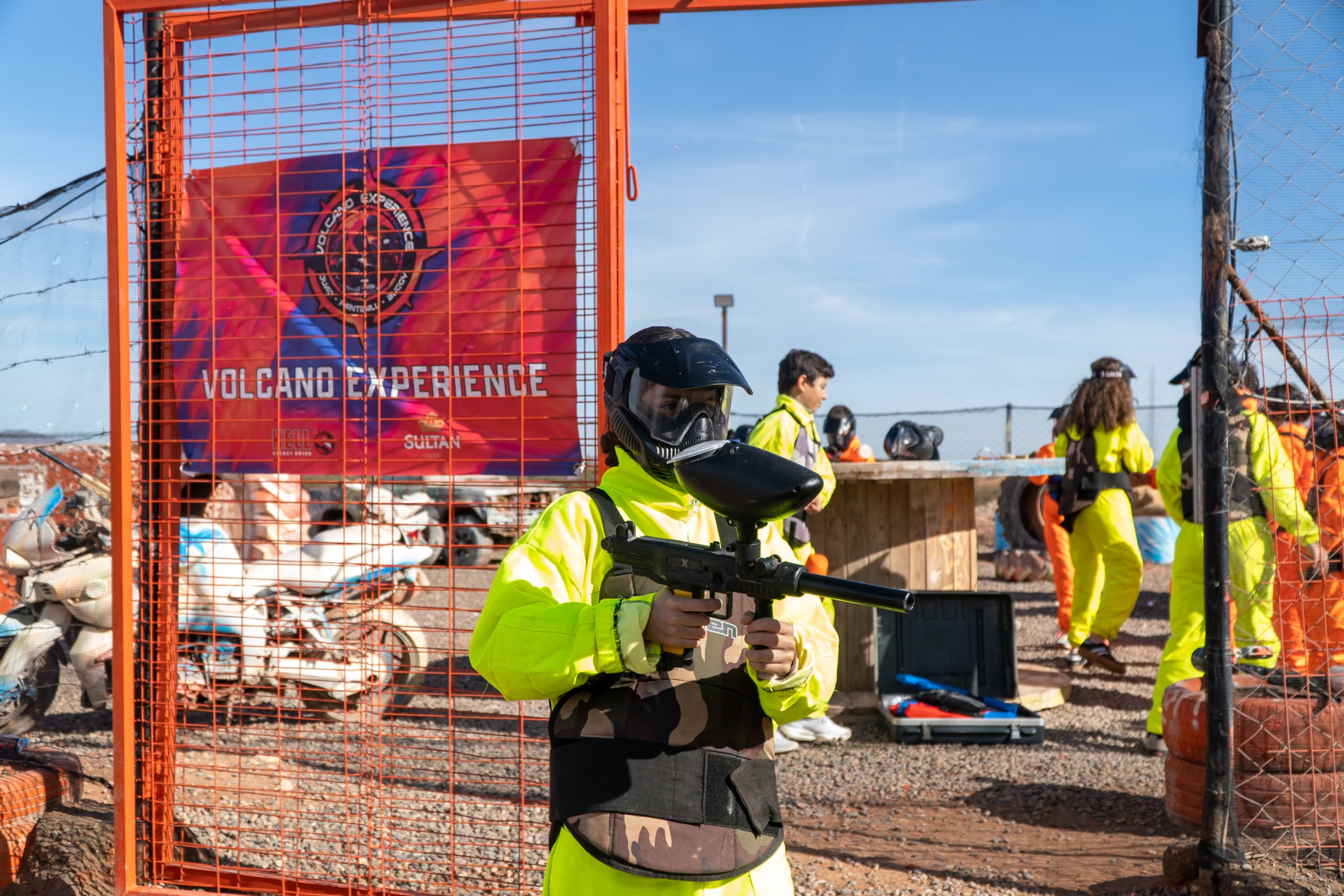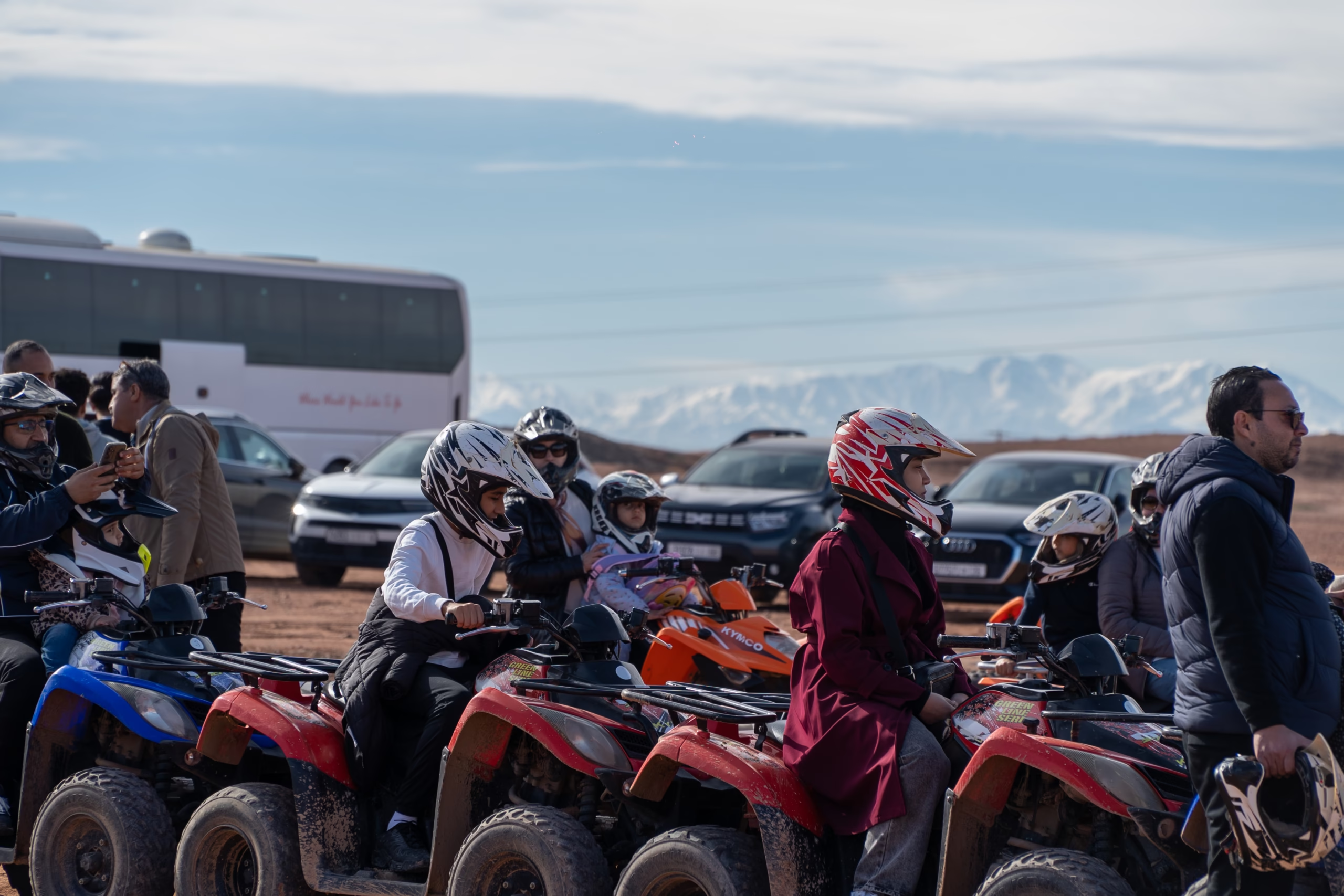

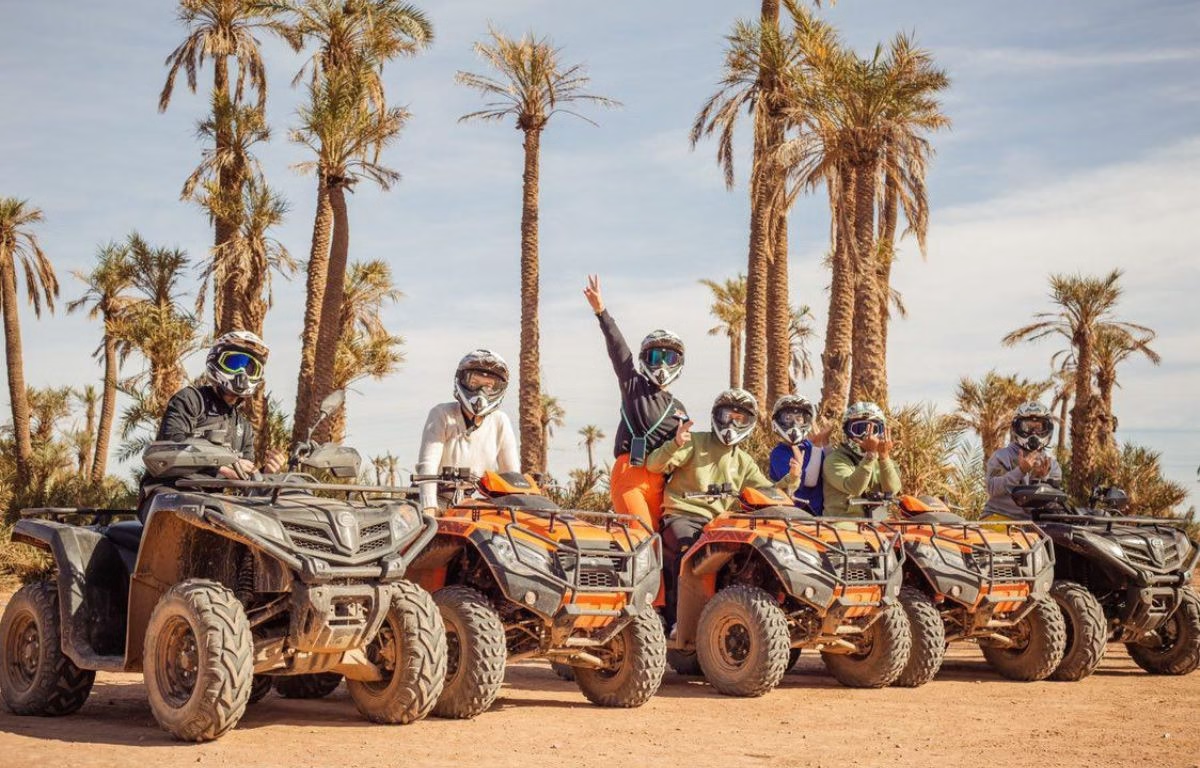
Many companies begin with the question, “What activity should we book?” That is usually the wrong place to start. An activity can be enjoyable and still fail to support the reason for bringing the team together.
A successful event begins with three decisions: what the company wants to achieve, who will participate, and which limits the organizer must work within. Budget, time, accessibility, transport, and weather all shape the final program. Activities come later.
This guide explains how to organize a team building event in Marrakech from the first planning conversation to the post-event review. It focuses on decisions an HR manager, office manager, team leader, or event organizer can act on. Readers looking for broader background can consult the complete Team Building Marrakech guide. Here, the focus is the planning process itself.
Quick Answer: How Do You Organize a Successful Team Building Event?
Define one primary objective, understand the participants, set the budget, choose the date and format, select suitable activities, confirm the venue, and build a realistic schedule. Then organize teams, rotations, transport, breaks, participant communication, and a backup plan. Confirm the details shortly before the event, manage participation and timing on the day, and collect feedback afterward to evaluate the result against the original objective.
How to Organize a Team Building Event: Step by Step
Step 1: Define What the Event Should Achieve
Choose one primary objective before discussing activities. A company may also choose one secondary objective, but trying to improve communication, reward employees, integrate new staff, and run a serious competition in the same short event usually leads to a confused program.
Write the objective as an observable outcome. “Improve teamwork” is broad. “Create interaction between employees from departments that rarely work together” gives the organizer something concrete to design and later evaluate.
| Objective | What the Event Should Encourage |
|---|---|
| Communication | Interaction, listening, and coordination |
| New employee integration | Mixing, introductions, and low-pressure conversation |
| Friendly competition | Clear teams, fair rules, scoring, and recognition |
| Employee reward | Enjoyment, choice, and lower-pressure participation |
| Cross-department connection | Mixed teams and shared tasks |
| Leadership practice | Delegation, decisions, and changing team roles |
If the planned occasion is broader than team building—such as an incentive day, retreat, or company celebration—use the planning approach in [INTERNAL LINK: Company Events in Marrakech: Top Activities for Your Team] before deciding which part of the program should be team focused.
Step 2: Understand Who Will Participate
Participant information changes the design. Confirm the expected number of people, approximate age range, departments, languages, accessibility needs, and general comfort with physical activity. Also establish whether colleagues already know one another, whether senior managers will participate, and whether the group includes international visitors.
Collect only information needed for access, safety, and organization. Employees should not be asked to disclose unnecessary personal or medical details. A simple form can ask whether they need an accessibility adjustment, have a relevant dietary requirement, or need to discuss a participation concern privately.
Do not assume everyone wants the same intensity. A mixed corporate group often works better with varied roles or activity stations than with one format that demands identical participation from every person.
Step 3: Establish a Realistic Budget
Calculate the full event cost, not only the activity price. Depending on the program, the budget may need to cover:
- Activities and venue
- Transportation
- Food and drinks
- Equipment or facilitators
- Photography, branding, or awards if requested
- A contingency amount for changes
A useful starting point is:
Budget per participant = total available event budget ÷ expected participants
This figure is a guide, not the final quote. Transport, venue hire, and other fixed costs may not decrease proportionally when more people attend. Keep a small part of the budget uncommitted until participant numbers and logistics are confirmed.
Step 4: Choose the Right Date and Duration
Match the duration to the objective. A short session of roughly one to two hours can fit into a working day and should have one clear activity or challenge. A half-day permits a briefing, structured rounds, a break, and a closing moment. A full-day needs careful pacing, food, rest, and a clear change of energy between sessions.
Consider weekday or weekend availability, working hours, travel time, season, and daylight for outdoor formats. There is no universally correct day. The best choice is the one that employees can attend without creating avoidable operational pressure for the company.
Step 5: Choose the Format Before Individual Activities
The format is the framework of the session. Activities are placed inside it. Common formats include:
- One main activity: Suitable for a short session or a small group.
- Rotating activities: Teams move between stations, helping larger groups participate with less waiting.
- Team tournament: Several rounds are connected through scores and a final result.
- Collaborative challenge: All participants work toward a shared outcome rather than competing.
- Meeting plus team building: A business session is followed by an activity-based program.
- Half-day program: A sequence of briefing, activities, breaks, and closing.
Choose the format that best serves the objective and participant flow. Only then decide which activities belong in it.
Step 6: Select Activities That Match the Objective
Judge an activity by what it asks participants to do, not by how impressive it looks in a photograph.
| Objective | Activity Characteristics to Look For |
| Communication | Requires information sharing and coordination |
| Leadership | Includes delegation and time-limited decisions |
| Integration | Mixes participants and makes conversation easy |
| Competition | Has understandable rules, fair scoring, and comparable rounds |
| Collaboration | Gives the group a shared task or outcome |
| Reward | Is accessible, enjoyable, and not overly pressured |
| Energy | Involves active participation with suitable breaks |
Ask whether people will participate or merely watch, how long they may wait, and whether different roles are available. An entertaining activity is not automatically appropriate for the objective.
For specific options rather than selection criteria, see [INTERNAL LINK: Best Team Building Activities in Marrakech for Companies].
Step 7: Choose the Right Venue
The venue must support the schedule and the people, not merely provide an attractive background. Confirm how participants will arrive, where they will gather, how teams will move, and what happens during breaks.
Venue Evaluation Checklist
- ☐ Travel time fits the event schedule
- ☐ Group size can be managed comfortably
- ☐ Activity areas suit the selected format
- ☐ Access requirements have been discussed
- ☐ Parking or group transport arrangements are clear
- ☐ Toilets and changing areas are available where relevant
- ☐ There is a briefing and meeting area
- ☐ Shade or rest space is available for outdoor sessions
- ☐ Food and water arrangements are understood
- ☐ Equipment responsibilities are confirmed
- ☐ Weather alternatives are discussed
- ☐ Arrival and departure flow will not create congestion
Step 8: Decide How Participants Will Be Divided Into Teams
Team allocation should support the event objective.
Random teams can introduce colleagues who do not usually interact. Department-based teams are simple and can support friendly competition, but they may reinforce existing groups. Mixed-department teams suit cross-company connection. Balanced teams can help when an activity involves different levels of confidence, experience, or physical intensity.
Prepare teams before the event when possible. Decide whether teams need names, colored identifiers, a leader, or a scoring sheet. If leadership is part of the objective, consider rotating the leader between rounds rather than allowing the most senior employee to direct everything.
Step 9: Build the Event Schedule Backward
Start with the required departure time and work backward. Add every operational element: arrival, check-in, welcome, briefing, team allocation, activities, transitions, water or rest breaks, results, and departure.
Example only — not a fixed Volcano Experience package.
| Time | Event Stage |
| 09:30 | Arrival and check-in |
| 09:45 | Welcome and briefing |
| 10:00 | Team allocation |
| 10:15 | Activity round 1 |
| 11:00 | Rotation and break |
| 11:15 | Activity round 2 |
| 12:00 | Final challenge |
| 12:30 | Results and group moment |
| 13:00 | Departure or lunch |
Buffer time matters because people need to move, ask questions, use facilities, and prepare for the next station. A schedule with no transition time is already late before the event begins.
Step 10: Plan Activity Rotations for Larger Groups
Divide a large group into smaller teams and start each one at a different station:
Group A → Station 1
Group B → Station 2
Group C → Station 3
After an agreed period, all groups rotate. Use equal session lengths, give the full rotation briefing before the first round, and use a clear signal for transitions. Assign a contact or facilitator to each station where appropriate.
Map the movement between stations before event day. A good rotation avoids two teams arriving at one place together, long walks that were not scheduled, inconsistent scoring, and queues for equipment. Keep one person responsible for the master clock and leave a small buffer between rounds.
Step 11: Organize Transportation and Arrival
The event begins at the departure point, not at the first activity. Confirm the pickup location, transport provider, departure time, estimated journey, arrival buffer, parking, meeting point, and return plan. Give participants one contact number for travel-day questions.
Plan for late arrivals. Decide whether transport can wait, whether the program will begin without them, and how they will join their team safely and without repeating a long briefing for everyone. Unclear transport can delay every later stage of the schedule.
Step 12: Plan Food, Water, and Breaks
Breaks support event flow. They allow participants to hydrate, reset, move between stations, and return ready for the next task. A full day needs more than one continuous block of high-energy activity.
Confirm when food will be served, how it fits the activity intensity, and how dietary requirements will be collected and communicated. Clarify who provides drinking water and where it will be available. Do not schedule a demanding activity immediately after a substantial meal without considering comfort and timing.
Step 13: Prepare for Marrakech Weather
Check the forecast close to the event and consider temperature, shade, hydration, activity intensity, wind, rain, and available daylight. In warmer conditions, an earlier or later activity window may be more practical. Outdoor schedules also need a clear alternative if conditions affect an activity.
Ask the venue which parts can move, shorten, or change. This planning issue is different from the broader reasons for choosing an outdoor format, which are covered in [INTERNAL LINK: Outdoor Team Building in Marrakech: Why It Works].
Step 14: Communicate Clearly With Employees
Send one concise participant message early enough for people to prepare. It should include the practical facts without revealing every challenge when surprise is part of the event.
Participant Information Checklist
- ☐ Date and meeting time
- ☐ Meeting point and transport details
- ☐ Expected return time
- ☐ Clothing and footwear guidance
- ☐ What to bring
- ☐ Food and water information
- ☐ Participation or access instructions
- ☐ Organizer contact
- ☐ Deadline for relevant requirements
Use one authoritative version of the schedule. Conflicting messages from HR, managers, and the venue cause avoidable confusion.
Step 15: Assign Responsibilities Before Event Day
One organizer should own the overall plan, but that person should not handle every operational question alone. Depending on group size, assign a venue contact, transport contact, participant contact, and team leaders.
Write down who can approve schedule changes and who communicates them. If transport is late, for example, the venue contact can adjust the start while the transport contact updates passengers. Clear ownership prevents several people from giving different instructions.
Step 16: Create a Backup Plan
Plan A is the intended program. Plan B explains what changes if weather, transport, participant numbers, or timing affects it. The backup does not need to duplicate the entire event.
Decide in advance which activity can be shortened, what can move indoors or under cover, how late arrivals will join, and which optional element can be removed without losing the primary objective. Record who makes the final decision and when participants will be informed.
Step 17: Confirm Everything 48–72 Hours Before the Event
Treat this as a useful final checkpoint, not a universal booking rule. Larger events may need much earlier planning.
- ☐ Final participant count
- ☐ Date, arrival time, and meeting point
- ☐ Transportation and return transport
- ☐ Activity schedule and rotations
- ☐ Team organization
- ☐ Food and drinks where applicable
- ☐ Weather forecast and Plan B
- ☐ Participant instructions
- ☐ Venue and company contacts
- ☐ Booking or payment requirements
What Should You Do on the Day of the Event?
Arrive Before Participants
Use the quiet time to confirm the venue setup, activity sequence, teams, contacts, and latest schedule. Check that signs or meeting instructions match what employees received.
Keep the Opening Brief
Participants need to know what will happen, where their team starts, the main schedule, and the rules that affect participation. A long corporate speech reduces activity time and makes key instructions harder to remember.
Protect the Schedule Without Making It Feel Rigid
Track the master timeline and know where delays can be absorbed. Shortening a transition may be possible; removing the final shared moment may undermine the event. Make small adjustments without repeatedly announcing pressure to participants.
Watch Participation, Not Just Timing
Notice whether someone is being left out, teams are waiting, instructions are unclear, or one person is controlling every decision. These are operational observations, not personality assessments. A facilitator can clarify roles or invite broader participation without turning the event into a formal evaluation.
How Do You Evaluate Whether the Event Worked?
Collect Simple Feedback
Send a short survey within a few days. Ask:
- Did you enjoy the event?
- Did the activities encourage interaction?
- Was the schedule comfortable?
- Was the information before the event clear?
- What should change next time?
- Would you participate in a similar event again?
Short surveys are more likely to be completed and easier to compare.
Compare the Result With the Original Objective
Do not judge success only by whether the activity was fun. If the objective was cross-department interaction, ask whether employees actually mixed outside their normal teams. If the objective was reward, ask whether the pace and participation level felt enjoyable.
The objective written in Step 1 becomes the evaluation standard. This closes the planning loop and prevents vague conclusions.
Document What to Improve
Record what happened while details are fresh: actual timing, transport performance, group sizes, waiting points, popular elements, participant comments, and logistical problems. These notes reduce guesswork when the company organizes its next event.
Common Mistakes When Organizing a Team Building Event
Choosing Activities Before Defining the Objective
The activity controls the event instead of serving it. Define one primary outcome first, then select the required activity characteristics.
Planning Too Many Activities
More bookings can mean less participation once briefings and movement are included. Use fewer activities with a clear progression and enough time to complete them well.
Ignoring Transition Time
Teams cannot finish one round and begin another instantly. Schedule movement, equipment changes, water, questions, and a small buffer.
Assuming Everyone Wants the Same Experience
Uniform intensity can exclude part of a mixed group. Offer varied roles or stations and discuss relevant accessibility needs before confirming the design.
Forgetting Transportation Time
A late arrival compresses every session. Build a realistic journey estimate, arrival buffer, meeting point, and late-arrival process.
Creating Teams at the Last Minute
On-the-spot allocation wastes time and may work against the objective. Prepare the team logic and identifiers beforehand, even if names change slightly.
Giving Participants Too Little Information
Surprise should concern the challenge, not footwear, transport, or return time. Send a single practical briefing before event day.
Having No Weather Alternative
Waiting until conditions change creates rushed decisions. Agree in advance what can move, shorten, or be replaced and who authorizes the change.
Ending Without Feedback
Without a short review, the company cannot distinguish a popular moment from a well-designed event. Ask concise questions tied to the original objective.
Team Building Event Planning Timeline
This is a useful framework, not a mandatory booking timeline. A large or complex corporate event may require significantly more time.
| Timeline | What to Do |
| 4–8 weeks before | Define the objective, estimate participants, set the budget, select a date, and research venues |
| 2–4 weeks before | Confirm the venue, format, activities, transportation, and main responsibilities |
| 1–2 weeks before | Prepare teams, detailed schedule, participant information, and relevant requirements |
| 48–72 hours before | Confirm numbers, contacts, transport, weather, schedule, and backup decisions |
| Event day | Arrive early, brief participants, manage flow, monitor rotations, and adjust timing |
| 1–3 days after | Collect feedback, compare it with the objective, and record improvements |
Team Building Event Checklist
Strategy
- ☐ Define the primary objective
- ☐ Add a secondary objective only if necessary
- ☐ Identify the participant profile
- ☐ Establish the budget
Event
- ☐ Choose the date and duration
- ☐ Choose the format
- ☐ Select activities using objective-based criteria
- ☐ Confirm the venue
Participants
- ☐ Confirm numbers
- ☐ Identify relevant access requirements
- ☐ Create teams
- ☐ Send participant information
Logistics
- ☐ Confirm transport, arrival time, and meeting point
- ☐ Plan food, water, and breaks
- ☐ Check weather
- ☐ Prepare Plan B
Event Day
- ☐ Arrive early
- ☐ Confirm the schedule
- ☐ Brief participants
- ☐ Monitor rotations and timing
After
- ☐ Collect feedback
- ☐ Review the objective
- ☐ Document improvements
Organizing a Team Building Event in Marrakech
Marrakech planning should account for transport between accommodation, meeting spaces, and the activity venue. Do not assume the activity duration is the total time employees will be away. Include boarding, travel, arrival, briefing, and return transport.
Outdoor timing should respond to the season and current forecast. Confirm shade, water, rest areas, and the available weather alternative. For international groups, also confirm the working language, hotel departure process, and whether the team-building session must fit around a meeting or conference schedule.
Companies comparing a dedicated session with a broader corporate day can review [INTERNAL LINK: Company Events in Marrakech: Top Activities for Your Team]. For booking-oriented information, the team building and corporate events in Marrakech page provides the relevant next step.
Organizing Your Team Building Event With Volcano Experience
Volcano Experience offers activity-based group experiences near Marrakech. Its published site presents corporate team building using group organization, team challenges, outdoor activities, and activity rotation. The final structure should still be confirmed directly for the company’s date, group, and objective.
When requesting a proposal, provide the preferred date, approximate participant count, primary objective, preferred duration, activity preferences, transport needs, and relevant organizational requirements. That information allows the provider to discuss a format before the company commits to an activity sequence.
Do not leave the objective in an internal HR document. Share it with the venue or organizer so that team allocation, rotation, pacing, and the closing moment can support it.
FAQ: Organizing a Team Building Event
How do you organize a successful team building event?
Start with one primary objective, participant needs, budget, and available time. Choose the format before the activities, then confirm the venue, teams, schedule, rotations, transport, breaks, communication, and backup plan. On the day, manage flow and participation. Afterward, compare feedback with the original objective.
How far in advance should you plan a team building event?
Four to eight weeks is a useful starting framework for a typical company event, but it is not a universal rule. Large groups, busy dates, complex transport, multiple activities, or international travel may require much earlier planning. Begin as soon as the date, objective, and approximate participant count are known.
How long should a team building event last?
The objective should determine the duration. One to two hours can support a focused activity. A half-day allows briefing, activities, breaks, and closing. A full day can offer more variety but needs food, rest, and careful pacing. Include travel and transition time when communicating the total commitment.
How do you choose team building activities?
Choose the behavior the activity requires. Communication objectives need coordination; integration needs mixing and accessible interaction; competition needs fair rules and scoring; reward events need enjoyable, lower-pressure participation. Check waiting time, physical demands, available roles, and fit with the group before booking.
How should employees be divided into teams?
Use the event objective. Random or mixed-department teams encourage new interaction. Department teams simplify organization and suit friendly competition but preserve existing groups. Balanced teams can distribute experience and confidence. Prepare teams before arrival and decide whether leaders should remain fixed or rotate.
How do you organize team building for a large group?
Divide participants into smaller teams, place each team at a different station, and rotate them after equal periods. Brief everyone before the first round, assign clear station contacts, use one master clock, map transitions, and keep a buffer. This reduces queues and inactive waiting.
What should employees know before a team building event?
Employees should receive the date, meeting time and point, transport plan, expected return, clothing and footwear guidance, what to bring, food information, contact person, and any relevant participation instructions. The organizer can keep individual challenges secret without withholding practical preparation details.
What should be included in a team building event budget?
Include activities, venue, transport, food, water, equipment, facilitation, requested photography or branding, awards if used, and a contingency amount. Separate fixed costs from per-participant costs, because transport and venue expenses may not change in the same way as attendance.
How do you measure whether a team building event was successful?
Compare the outcome with the primary objective. Use a short participant survey, organizer observations, schedule and logistics notes, and evidence relevant to the goal. For cross-department interaction, examine whether teams mixed. For reward, focus on enjoyment, access, pacing, and willingness to participate again.
Plan Your Team Building Event in Marrakech
A successful team-building event begins before anyone reaches the venue. The organizer must align objective + participants + format + activities + schedule + logistics + communication. When those elements support one another, the day is easier to manage and the result can be evaluated meaningfully.
Companies planning a team-building event in Marrakech can contact Volcano Experience with their approximate group size, preferred date, event objective, and preferred duration to discuss an appropriate format.